


Selecting the right cement silo is a critical decision that directly impacts project efficiency, cost optimization, and operational flow. Many contractors and plant owners either overspend on oversized vertical silos or struggle with capacity limitations in horizontal ones.
This guide gives you a clear, non-generic, real-world comparison to help you choose the right silo based on actual site conditions and usage patterns.
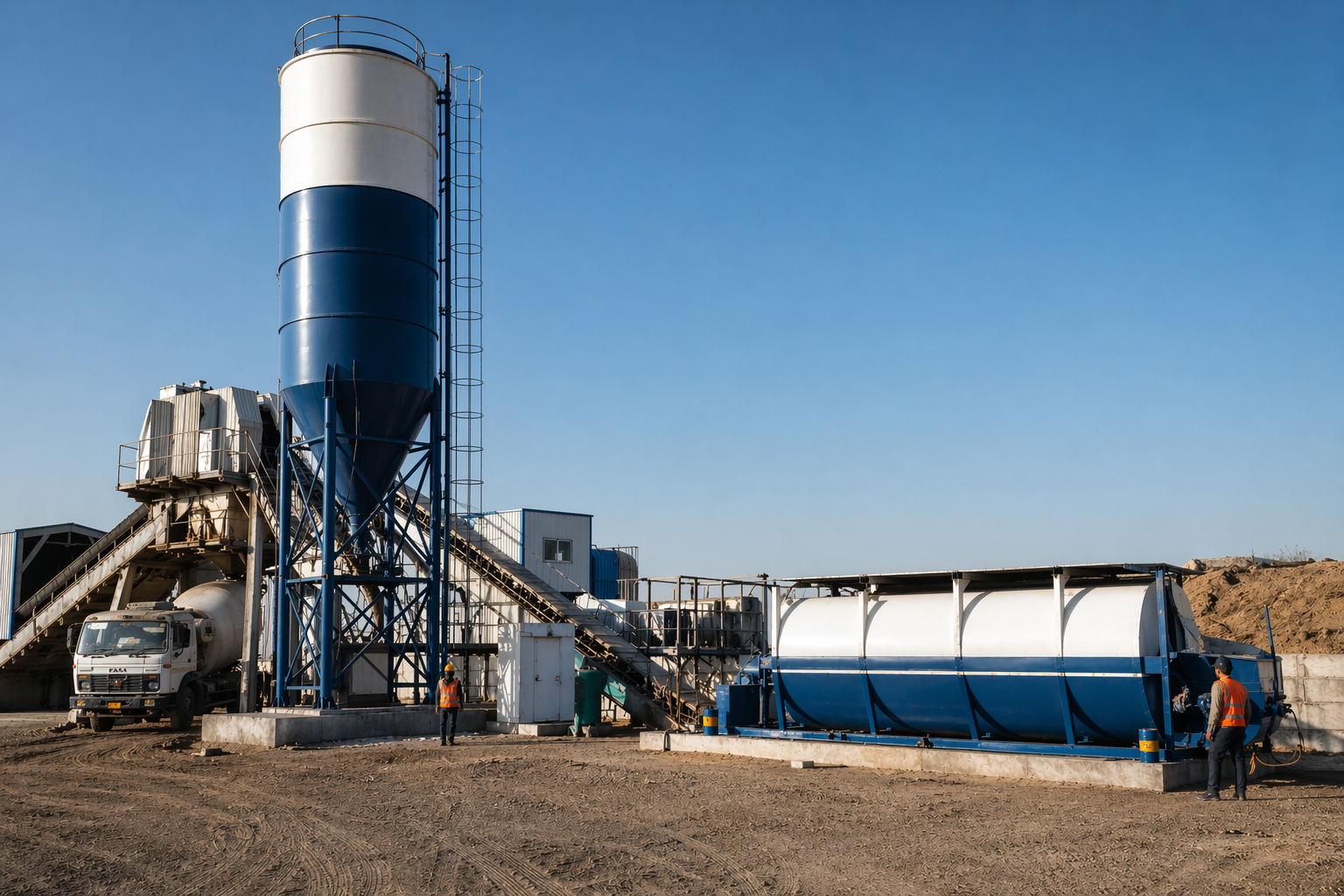
Understanding the Core Difference
The difference between horizontal and vertical cement silos is not just structural – it defines how your entire material handling system will function.
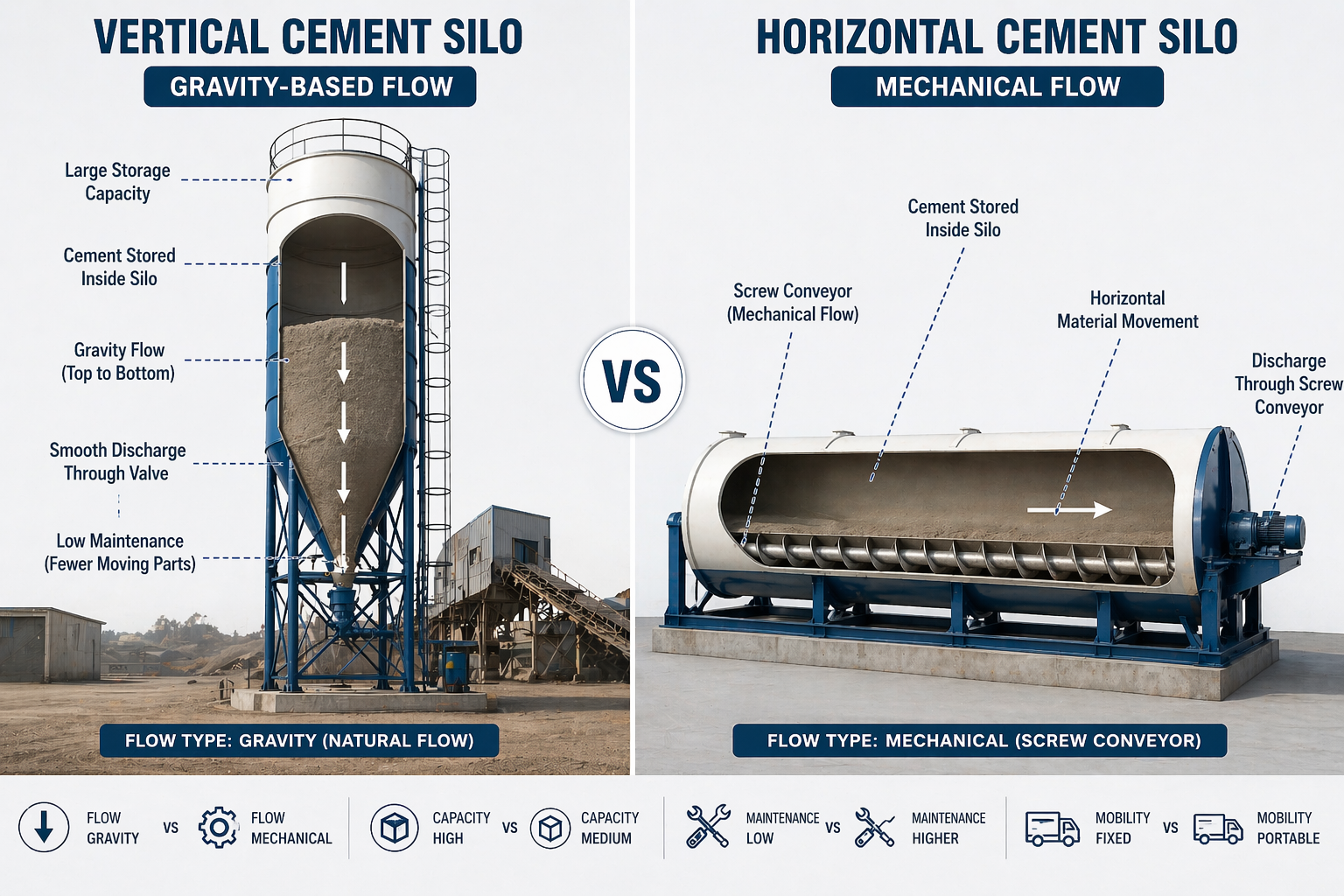
- Vertical Silos focus on high-capacity, gravity-based efficiency
- Horizontal Silos focus on mobility, speed, and flexibility
Vertical Cement Silo – Detailed Breakdown
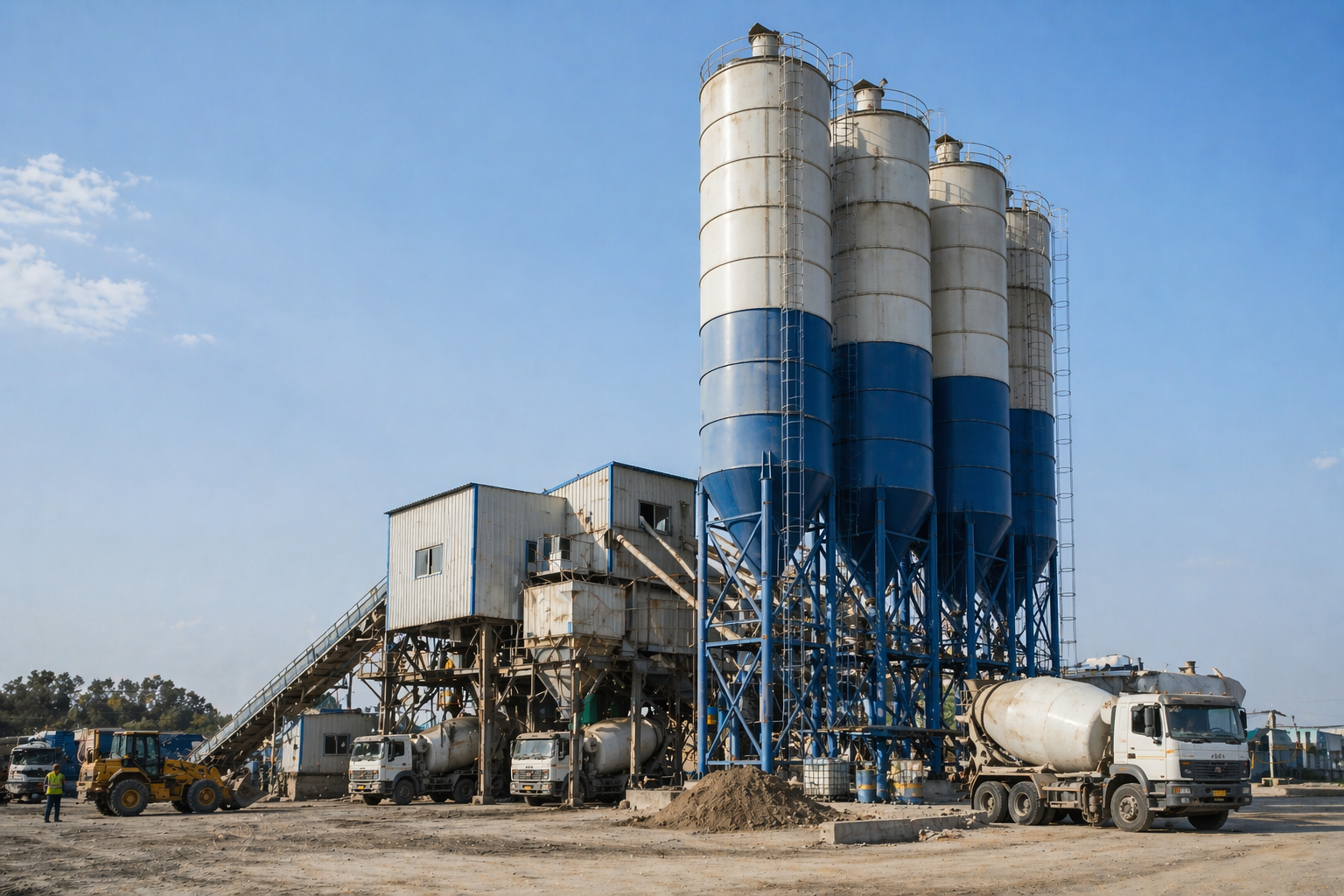
A vertical cement silo is a tall, upright structure used primarily in permanent and high-capacity setups.
Where It Performs Best:
- RMC batching plants
- Infrastructure projects with continuous demand
- Large-scale construction sites
Key Advantages:
- High Storage Capacity – Typically 50 to 500+ tons
- Efficient Gravity Discharge – Reduces dependency on mechanical systems
- Consistent Material Flow – Lower risk of clogging or uneven discharge
- Lower Maintenance – Fewer moving parts
Practical Limitations:
- Requires heavy RCC foundation
- Installation takes time (crane, alignment, civil work)
- Not suitable for projects with frequent relocation
- Needs sufficient vertical clearance
Horizontal Cement Silo – Detailed Breakdown
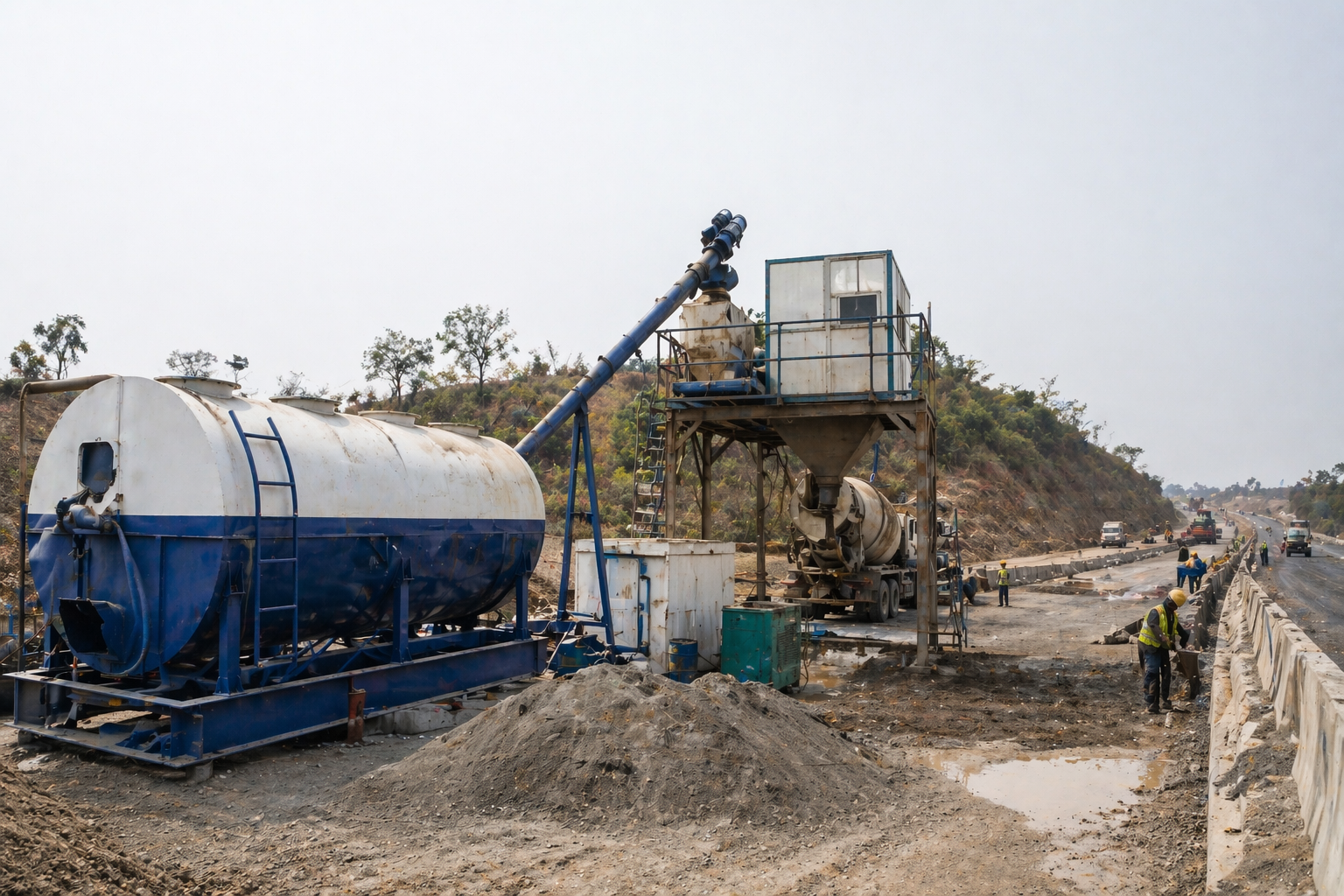
A horizontal cement silo is a low-height, modular unit, designed for quick deployment and mobility.
Where It Performs Best:
- Road and highway projects
- Remote construction sites
- Temporary batching plants
- Projects with shifting locations
Key Advantages:
- Quick Installation – Operational within hours
- No Major Foundation Required
- Highly Portable – Easy relocation between sites
- Lower Initial Investment
Practical Limitations:
- Limited Capacity – Usually 20 to 100 tons
- Relies on screw conveyors for discharge
- Slightly higher maintenance due to mechanical systems
- Not ideal for high-volume continuous operations
Horizontal vs Vertical Cement Silo – Strategic Comparison
| Decision Factor | Vertical Silo | Horizontal Silo |
| Project Type | Long-term / Permanent | Short-term / Mobile |
| Capacity Requirement | High (Bulk Storage) | Medium (Controlled Usage) |
| Installation Time | High | Very Low |
| Mobility | Fixed | Highly Portable |
| Foundation | Required | Not Required / Minimal |
| Operational Efficiency | High (Gravity-based) | Moderate (Mechanical-based) |
| Cost Perspective | Higher upfront, better long-term ROI | Lower upfront, flexible usage |
How to Choose the Right Cement Silo (Real Decision Framework)
Instead of guessing, use this practical decision logic:
Choose Vertical Silo if:
- Your daily cement consumption is high (100+ tons/day)
- The project duration is long-term
- You need continuous batching without interruption
- You want low maintenance in the long run
Choose Horizontal Silo if:
- Your project is temporary or location-based
- You need quick setup and immediate operation
- Your cement consumption is moderate
- Mobility and flexibility are priority factors
Real Industry Insight (Non-Generic)
Most contractors make a critical mistake – they choose silos based on price instead of workflow.
What actually matters:
- Cement consumption cycle
- Refill frequency
- Site logistics (height vs space)
- Future expansion plans
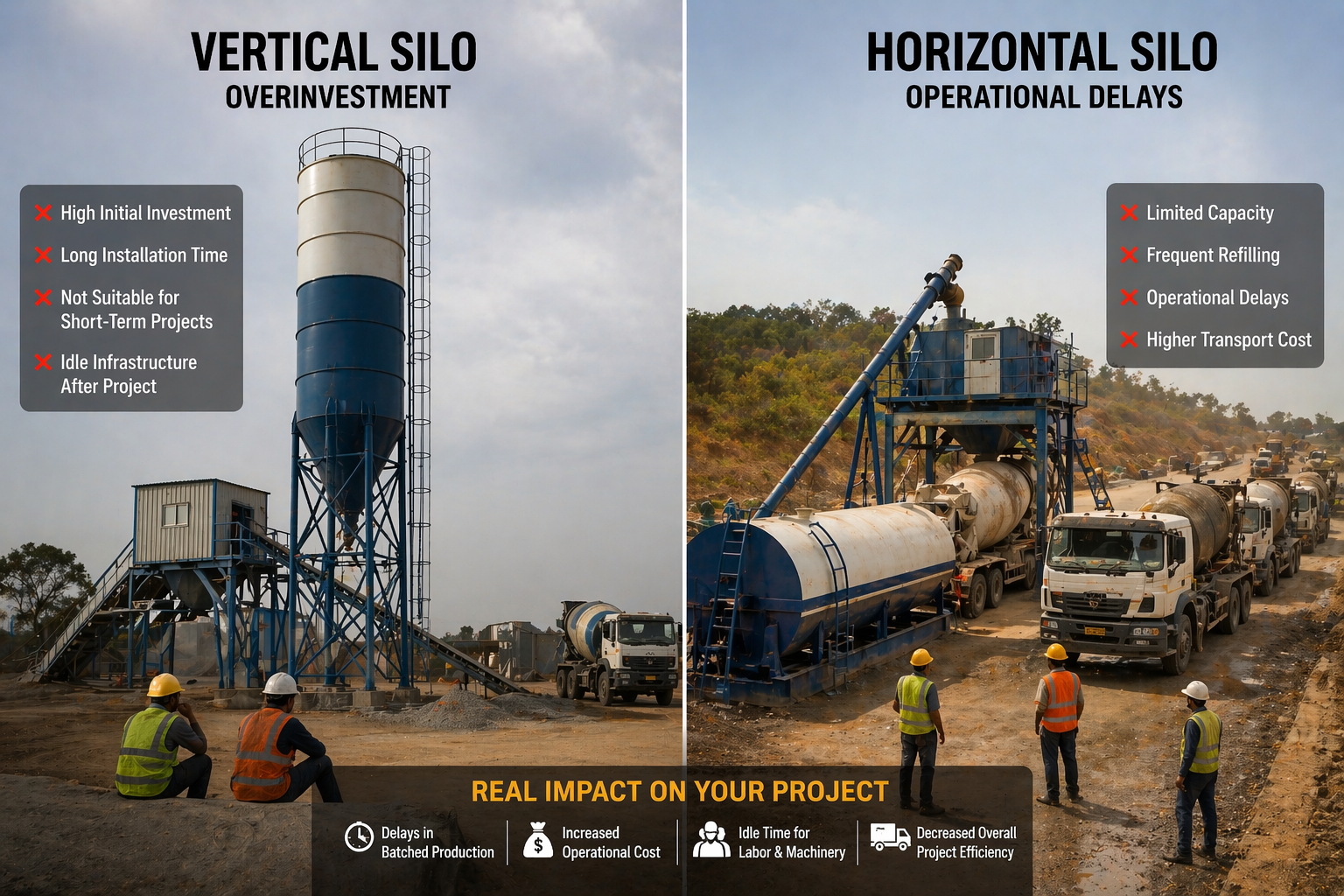
Example Scenario:
A contractor using a horizontal silo on a high-consumption site ends up:
- Refilling multiple times per day
- Facing operational delays
- Increasing transport cost
On the other hand, installing a vertical silo on a short-term project leads to:
- Unnecessary capital investment
- Idle infrastructure after project completion
Hybrid Approach – What Advanced Plants Are Doing
Modern setups often combine both:
- Vertical silo for bulk storage at main plant
- Horizontal silo for on-site flexibility
This approach balances:
- Capacity
- Mobility
- Cost efficiency
Final Conclusion
There is no universally “best” cement silo – only the right silo for your use case.
- Choose vertical for scale, efficiency, and long-term output
- Choose horizontal for speed, flexibility, and cost control
Making the correct decision here can directly improve your project timelines, operational efficiency, and overall profitability.
 English
 Hindi
Hindi Arabic
 Chinese (Simplified)
 Dutch
Dutch French
 German
 Italian
 Portuguese
 Russian
 Spanish