


Investing in a cement silo is not just about storage – it directly affects your project efficiency, cost control, and operational reliability. Whether you are running an RMC plant, infrastructure project, or construction site, choosing the wrong silo can lead to delays, wastage, and unexpected expenses.
This guide breaks down the critical, real-world factors you must evaluate before buying a cement silo – based on actual industry challenges, not generic advice.
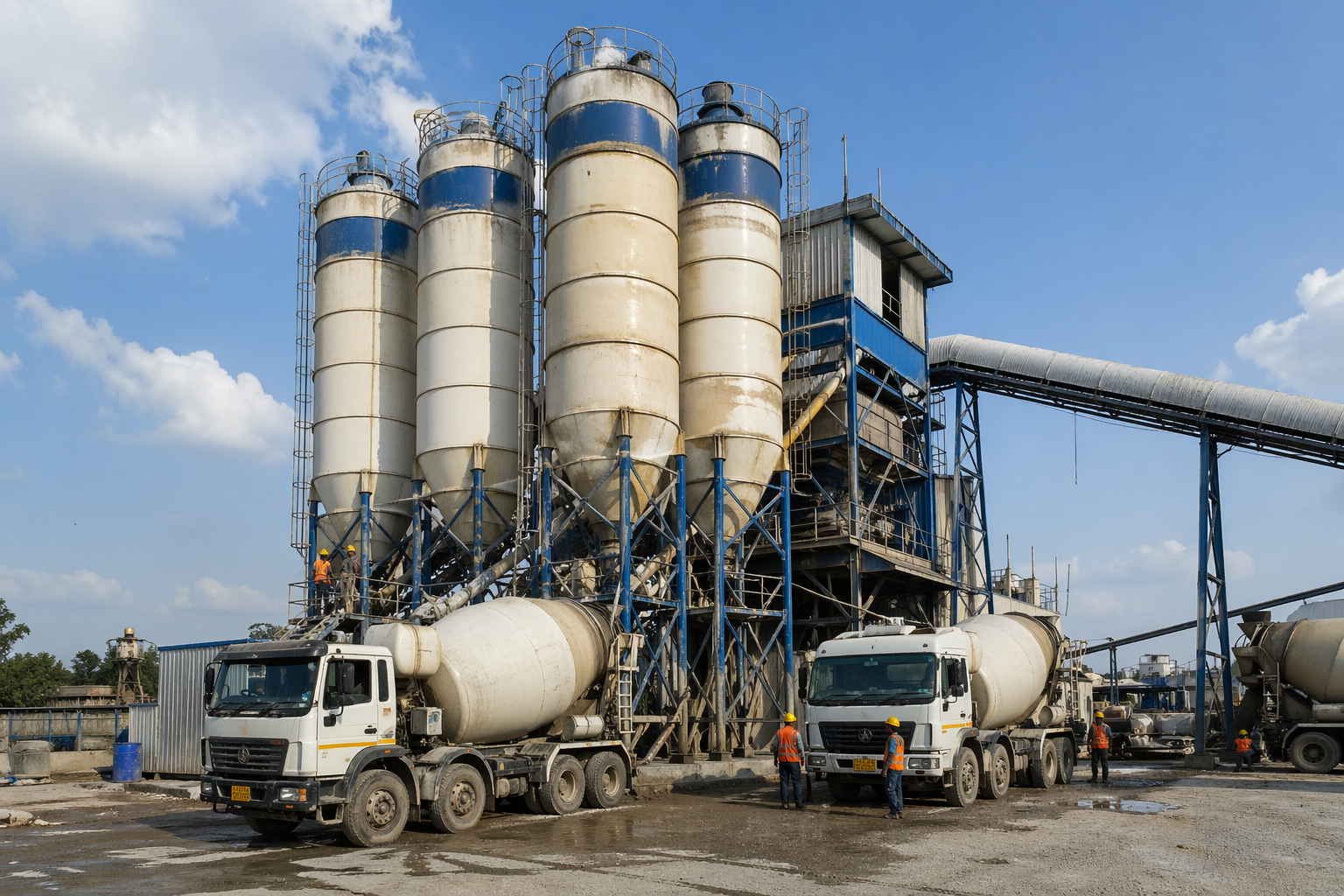
- Cement Storage Capacity (Don’t Guess – Calculate)
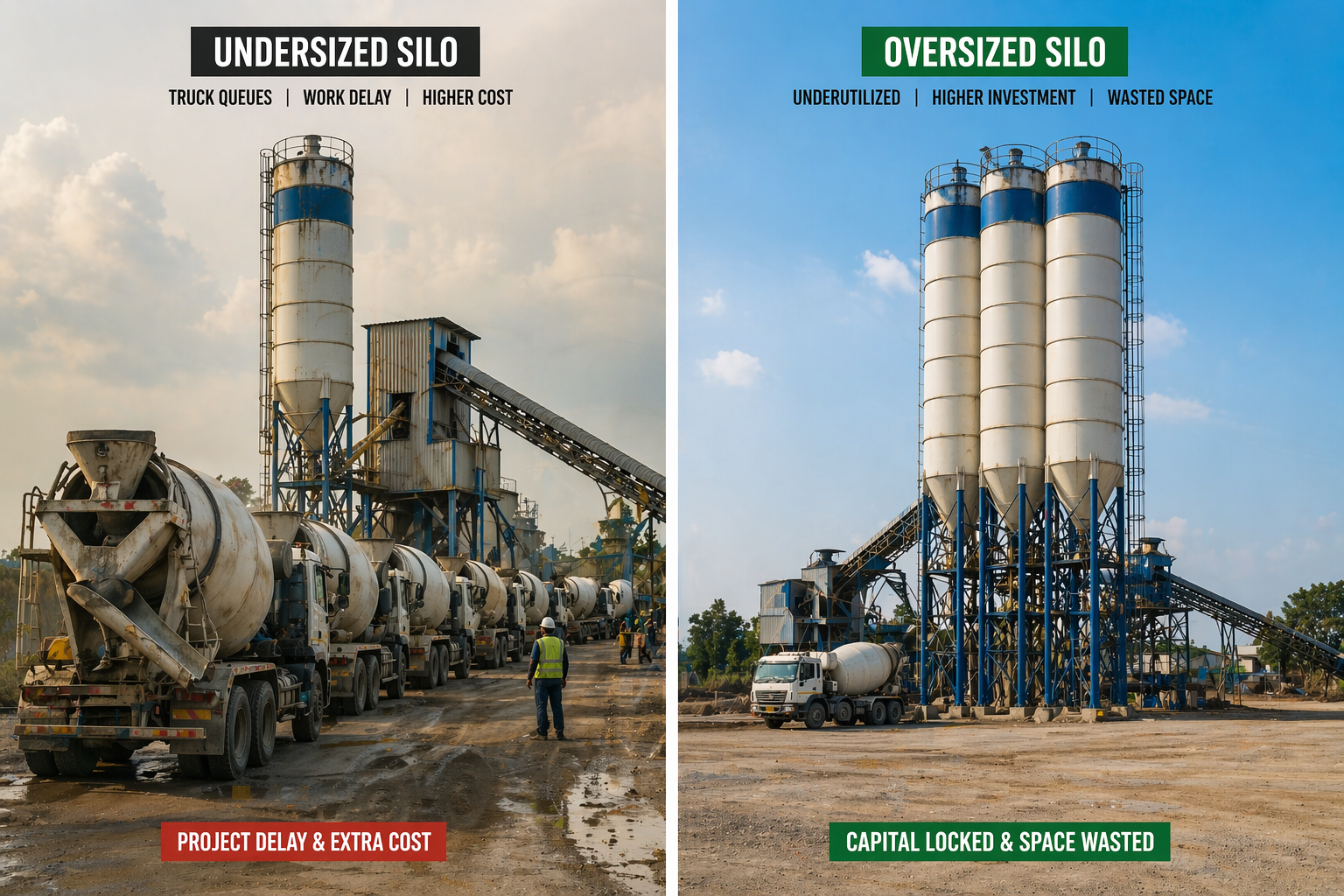
One of the biggest mistakes buyers make is either:
- Over-sizing → unnecessary capital investment
- Under-sizing → frequent refills, project delays
What to check:
- Daily cement consumption (tons/day)
- Refill cycle (how often supply trucks arrive)
- Buffer stock requirement (usually 2–3 days)
Pro Insight:
Always plan for peak demand, not average usage. Many projects fail here during high-load phases.
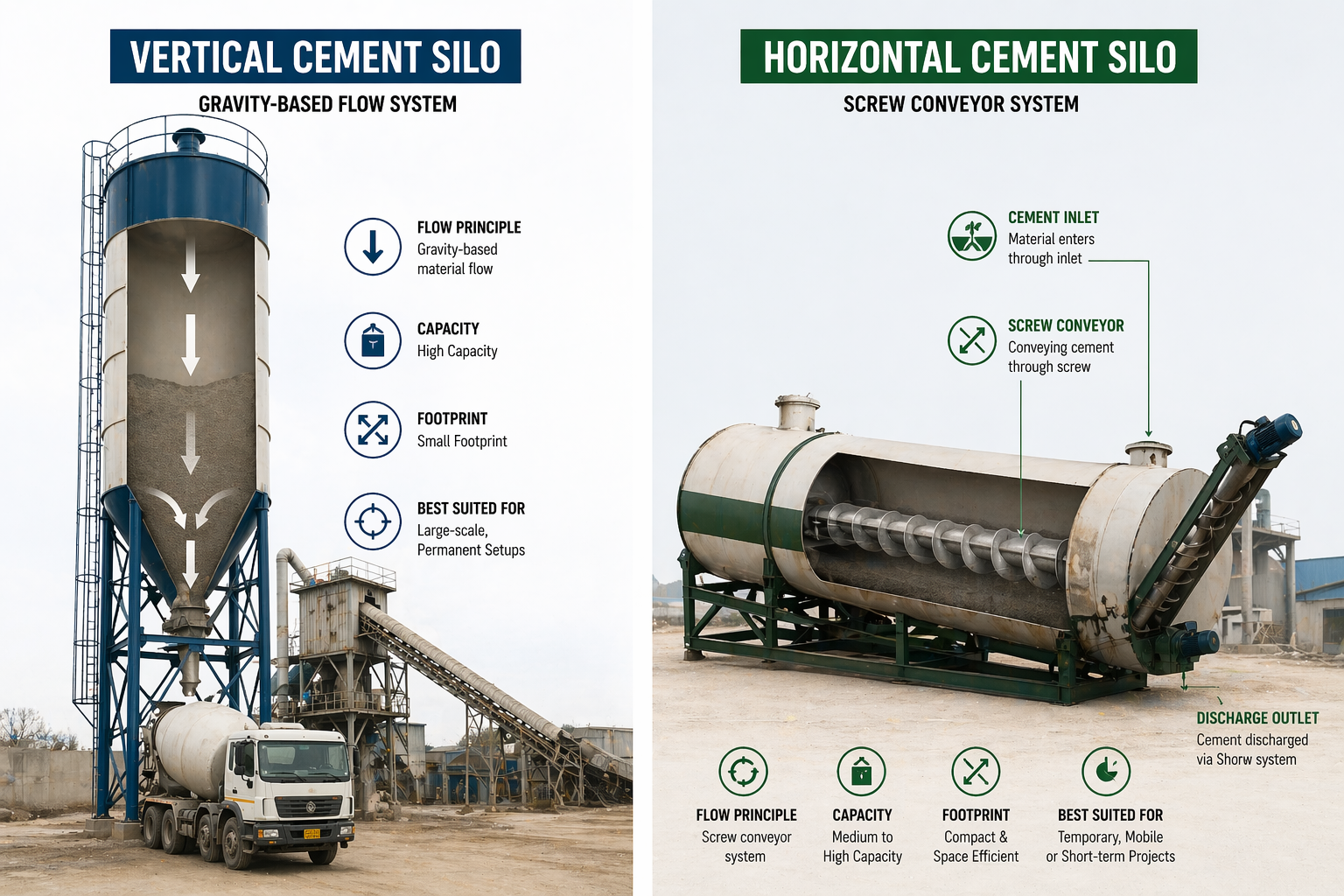
- Type of Cement Silo (Vertical vs Horizontal)
Your site conditions decide the type – not just price.
Vertical Silos:
- Suitable for large-scale, permanent setups
- Better for gravity-based material flow
- Higher capacity with smaller footprint
Horizontal Silos:
- Ideal for temporary or mobile projects
- Easy installation, no heavy foundation required
- Faster relocation between sites
Pro Insight:
If your project duration is less than 6–8 months, a horizontal silo often gives better ROI.
- Material Quality & Build Strength
A cement silo operates under heavy load and harsh conditions.
What to inspect:
- Steel thickness and grade
- Welding quality (no gaps, no weak joints)
- Anti-corrosion coating or paint
Why it matters:
Poor material quality leads to:
- Structural failures
- Cement leakage
- Reduced lifespan
- Discharge System Efficiency
This is where most operational problems occur.
Check for:
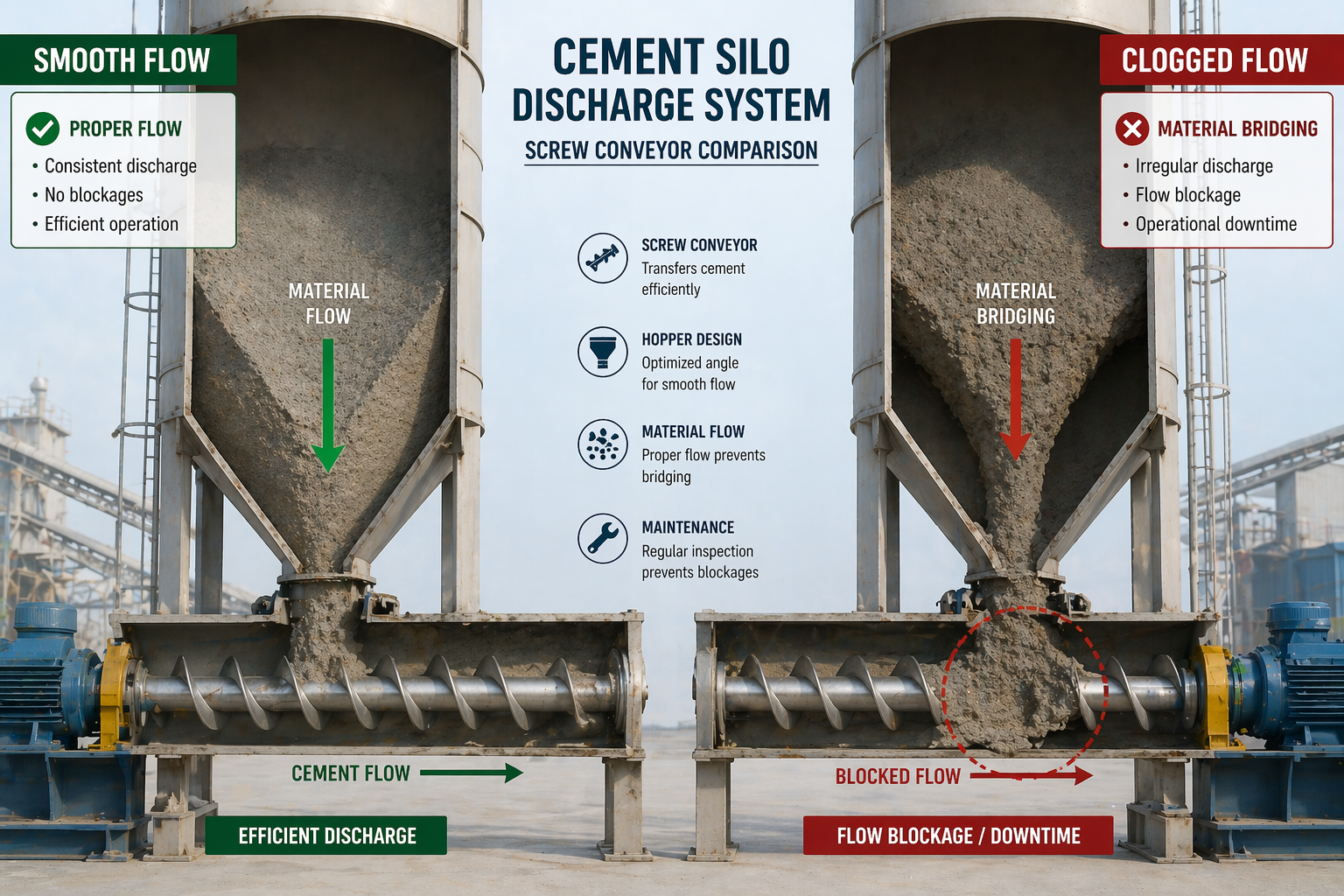
- Screw conveyor quality
- Flow consistency (no clogging)
- Proper hopper angle for smooth discharge
Pro Insight:
A poorly designed discharge system leads to cement bridging and flow blockage, which can shut down your batching process.
- Dust Control System (Critical for Compliance)
Cement dust is not just messy – it’s a compliance and health issue.
Must-have features:
- Dust collector / bag filter
- Pressure relief valve
- Air filtration system
Why it matters:
- Prevents environmental penalties
- Protects workers
- Maintains site cleanliness
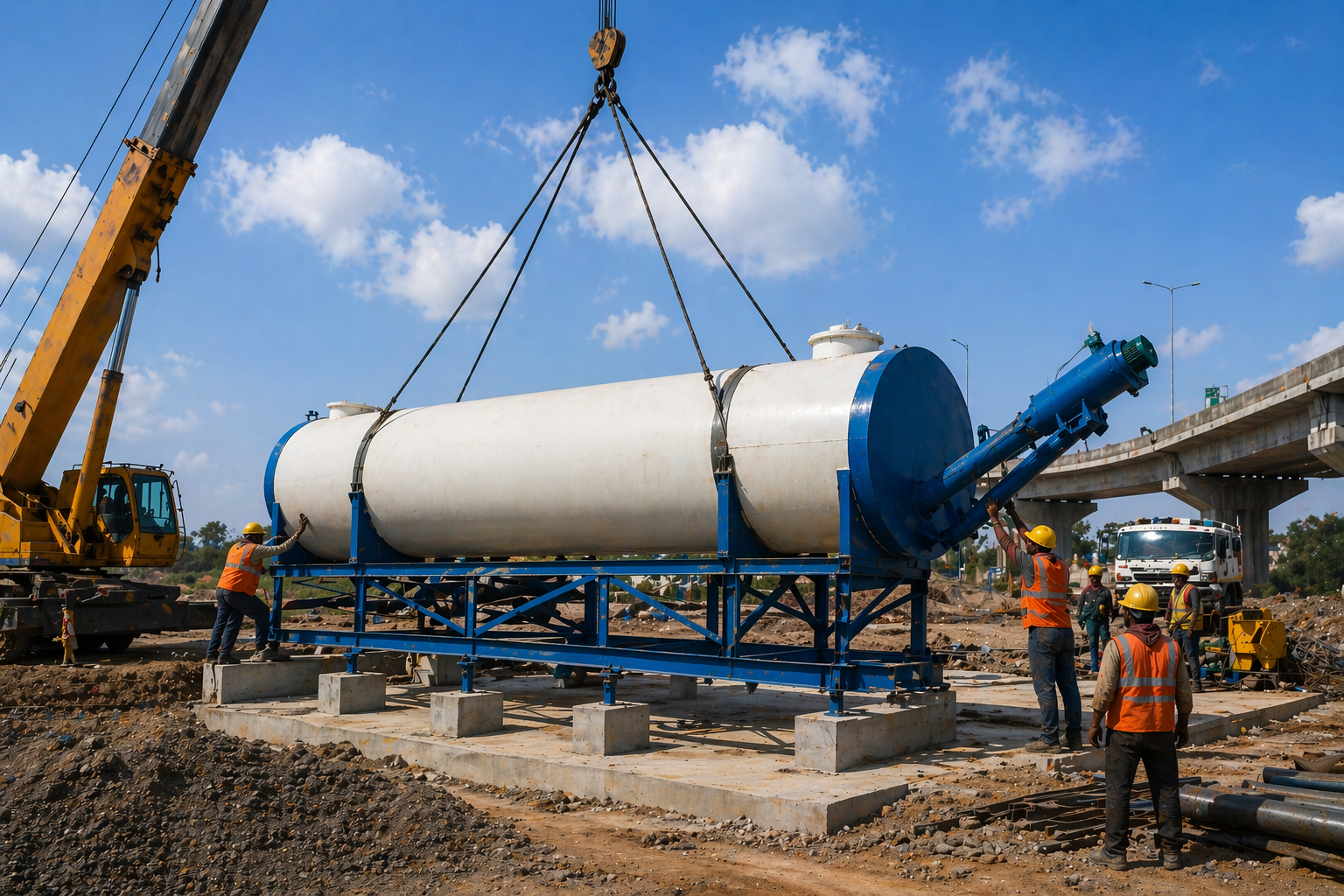
- Ease of Installation & Mobility
Time is money on a construction site.
Ask:
- How long does installation take?
- Does it require heavy foundation?
- Can it be relocated easily?
Pro Insight:
Horizontal silos can be operational in 1–2 days, while vertical silos may take significantly longer.
- Automation & Monitoring Features
Modern silos are no longer just storage units.
Look for:
- Level indicators (to track cement quantity)
- Load cells for weight measurement
- Control panel integration with batching plant
Why it matters:
- Prevents overfilling
- Improves batching accuracy
- Reduces manual errors
- Safety Features (Non-Negotiable)
Ignoring safety can lead to major accidents.
Essential safety checks:
- Pressure safety valves
- Emergency shut-off systems
- Stable ladder and platform design
- Transportation & Logistics Cost
Many buyers ignore this hidden cost.
Evaluate:
- Transportation charges
- Site accessibility
- Loading/unloading requirements
Pro Insight:
A cheaper silo can become expensive if logistics are complicated.
- Supplier Reliability & After-Sales Support
This is often the difference between smooth operations and constant headaches.
Check:
- Manufacturer experience
- Installation support
- Availability of spare parts
- Service response time
Why it matters:
Breakdowns without support = project downtime + financial loss
- Customization Options
Every project is different.
Ask your supplier:
- Can capacity be customized?
- Can the silo be modified for site constraints?
- Are add-ons available (extra filters, automation, etc.)?
- Total Cost of Ownership (Not Just Purchase Price)
Don’t focus only on initial cost.
Consider:
- Maintenance cost
- Energy consumption
- Operational efficiency
- Lifespan
Pro Insight:
A slightly higher upfront investment often results in lower long-term cost.
Common Mistakes to Avoid
- Choosing based only on price
- Ignoring discharge system design
- Not planning for peak demand
- Skipping dust control systems
- Buying without checking supplier credibility
Final Thoughts
Buying a cement silo is a strategic decision, not a simple purchase. The right choice ensures:
- Smooth project execution
- Lower operational cost
- Better productivity
The wrong choice leads to:
- Delays
- Increased expenses
- Operational inefficiencies
Make the Right Choice for Your Project
If you are planning to invest in a cement silo, don’t take chances with guesswork or generic solutions. Evaluate your exact requirement, site conditions, and long-term usage before making a decision.
For reliable, high-performance cement silos built for real construction challenges, connect with Shrinathji Infracon today.
Get the right guidance, the right design, and the right solution – tailored specifically for your project.
Your project efficiency starts with the right silo.
 English
 Hindi
Hindi Arabic
 Chinese (Simplified)
 Dutch
Dutch French
 German
 Italian
 Portuguese
 Russian
 Spanish