



A practical, non-generic guide for contractors, RMC plant owners, and infrastructure developers
Installing a cement silo is not just a one-time setup decision – it directly impacts your batching efficiency, material flow, project timelines, and long-term operational costs. Yet, many construction businesses overlook critical factors during installation, leading to avoidable losses and inefficiencies.
This guide breaks down the top 5 real-world mistakes seen across construction sites and RMC plants, along with actionable solutions to ensure your cement silo installation is optimized from day one.
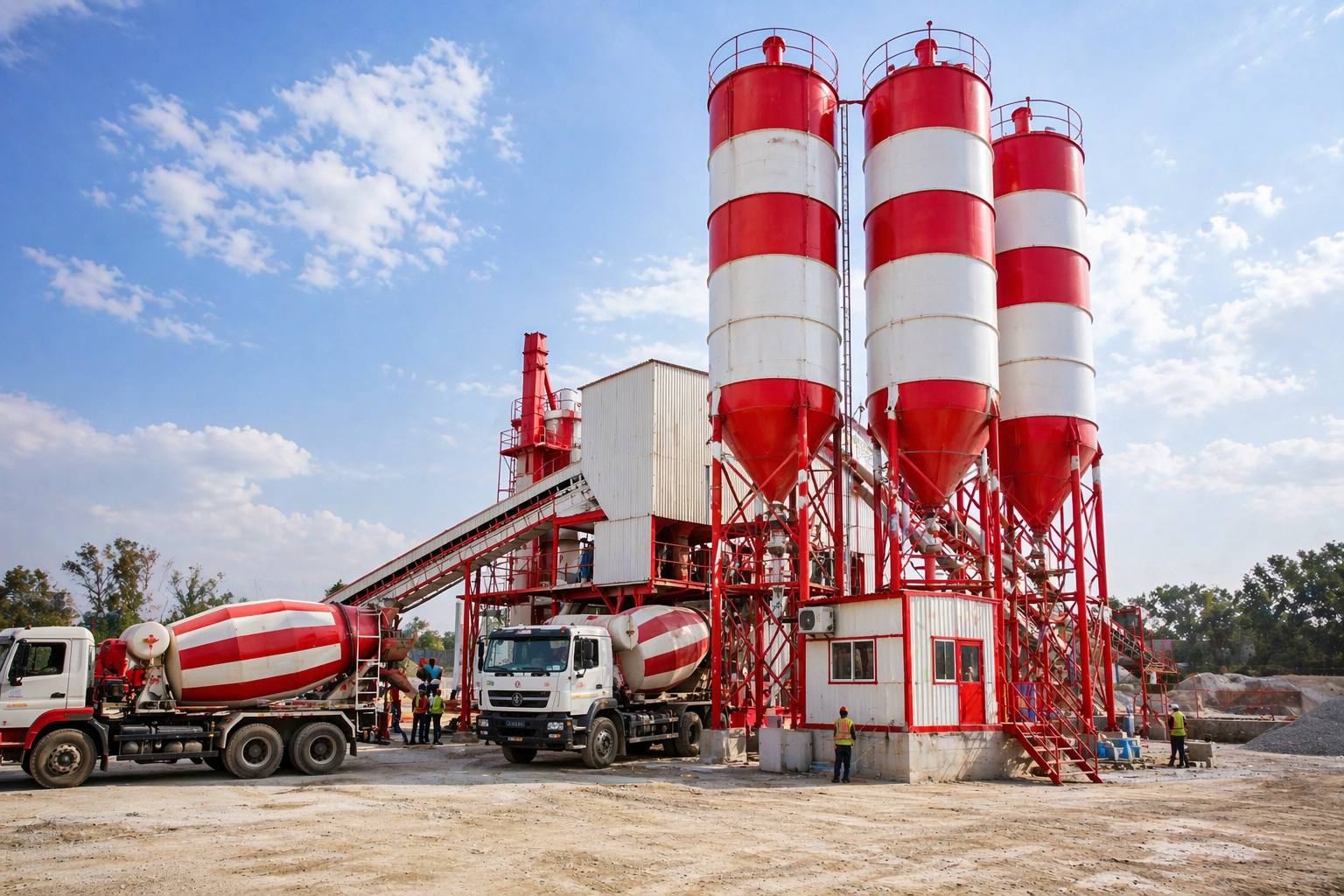
- Incorrect Silo Capacity Selection
The Mistake
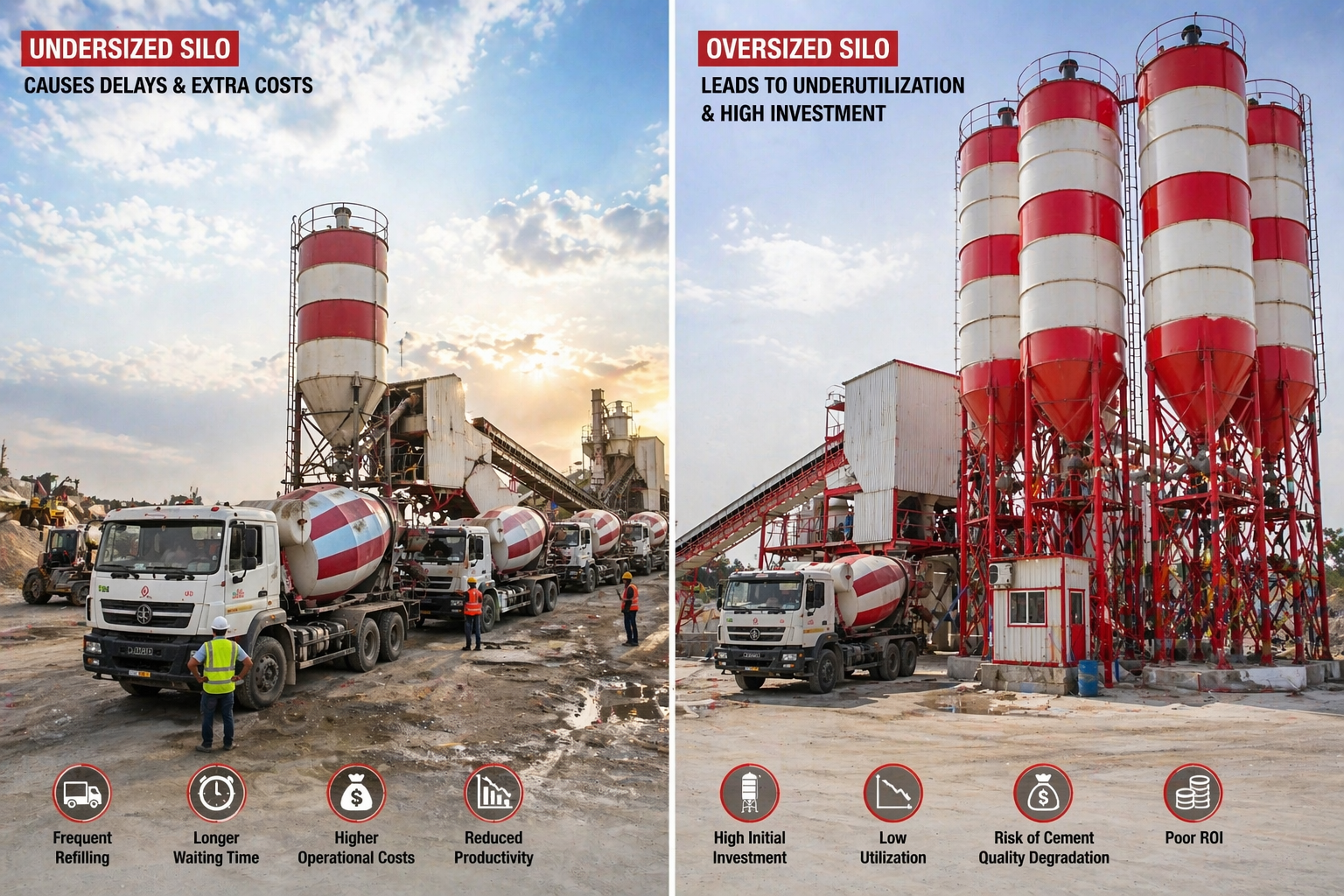
Choosing a silo that is either too small or too large without analyzing actual consumption patterns.
- Undersized silo → Frequent refilling, project delays, truck dependency
- Oversized silo → High upfront cost, underutilized investment, cement quality risks
Why It Happens
Most buyers rely on rough estimates instead of data-driven calculations.
What You Should Do
Calculate your daily cement consumption based on production capacity:
Daily Cement Requirement (tons) = Concrete Output (m³/day) × Cement Content (kg/m³) ÷ 1000
Then align it with:
- Delivery cycle (how often cement arrives)
- Buffer stock (minimum 2-3 days recommended)
- Poor Foundation Planning
The Mistake
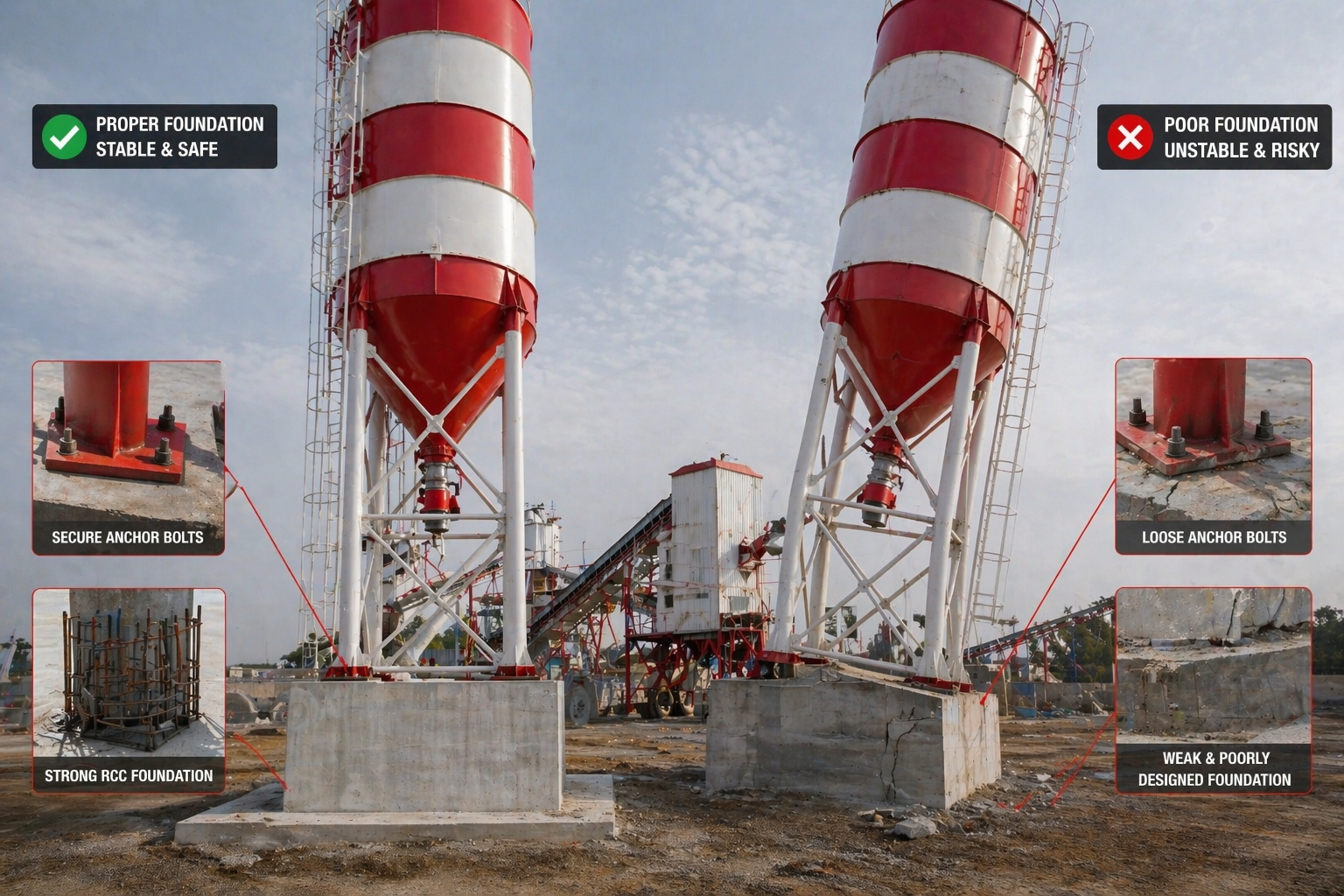
Ignoring soil conditions and load-bearing requirements while preparing the foundation.
Real Impact
- Structural instability
- Silo tilting or cracking
- Increased risk during high wind conditions
- Long-term maintenance issues
Why It Happens
Many sites treat silo installation like a temporary setup, especially in fast-moving projects.
What You Should Do
- Conduct a soil load-bearing test
- Design foundation based on:
- Silo capacity (tonnage)
- Height and diameter
- Wind load conditions
- Use proper RCC foundation with anchor bolts
A strong foundation is not optional – it is critical infrastructure.
- Improper Material Flow Design (Discharge System Issues)
The Mistake
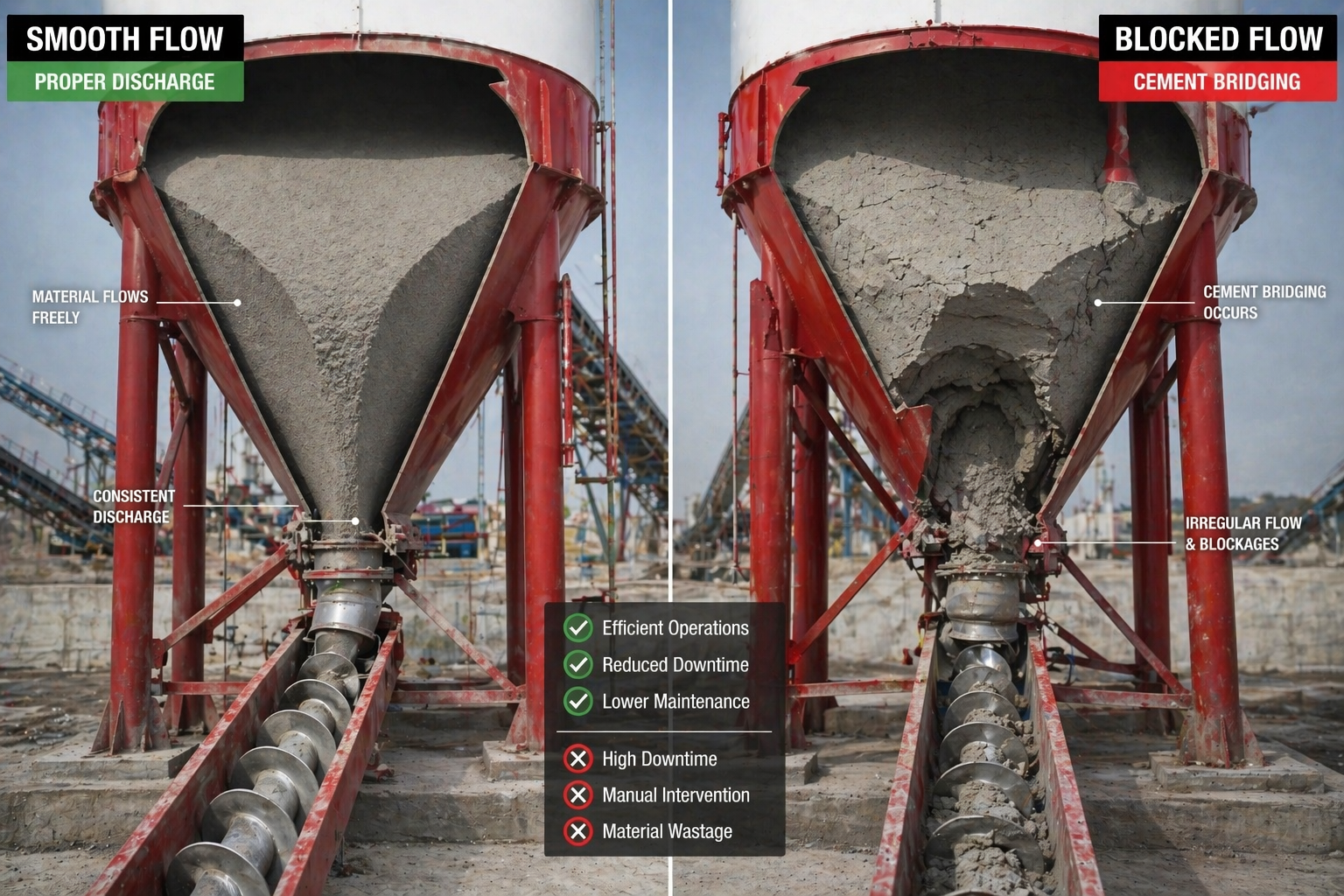
Not considering how cement will flow out of the silo, leading to blockages like cement bridging or uneven discharge.
Real Impact
- Interrupted batching operations
- Manual intervention required
- Material wastage
- Increased downtime
Why It Happens
Focus is placed on storage, not on discharge engineering.
What You Should Do
- Ensure proper hopper angle design for smooth gravity flow
- Install:
- Vibrators or aeration systems
- High-quality screw conveyors
- Match discharge speed with batching plant requirements
Efficient outflow is as important as storage capacity.
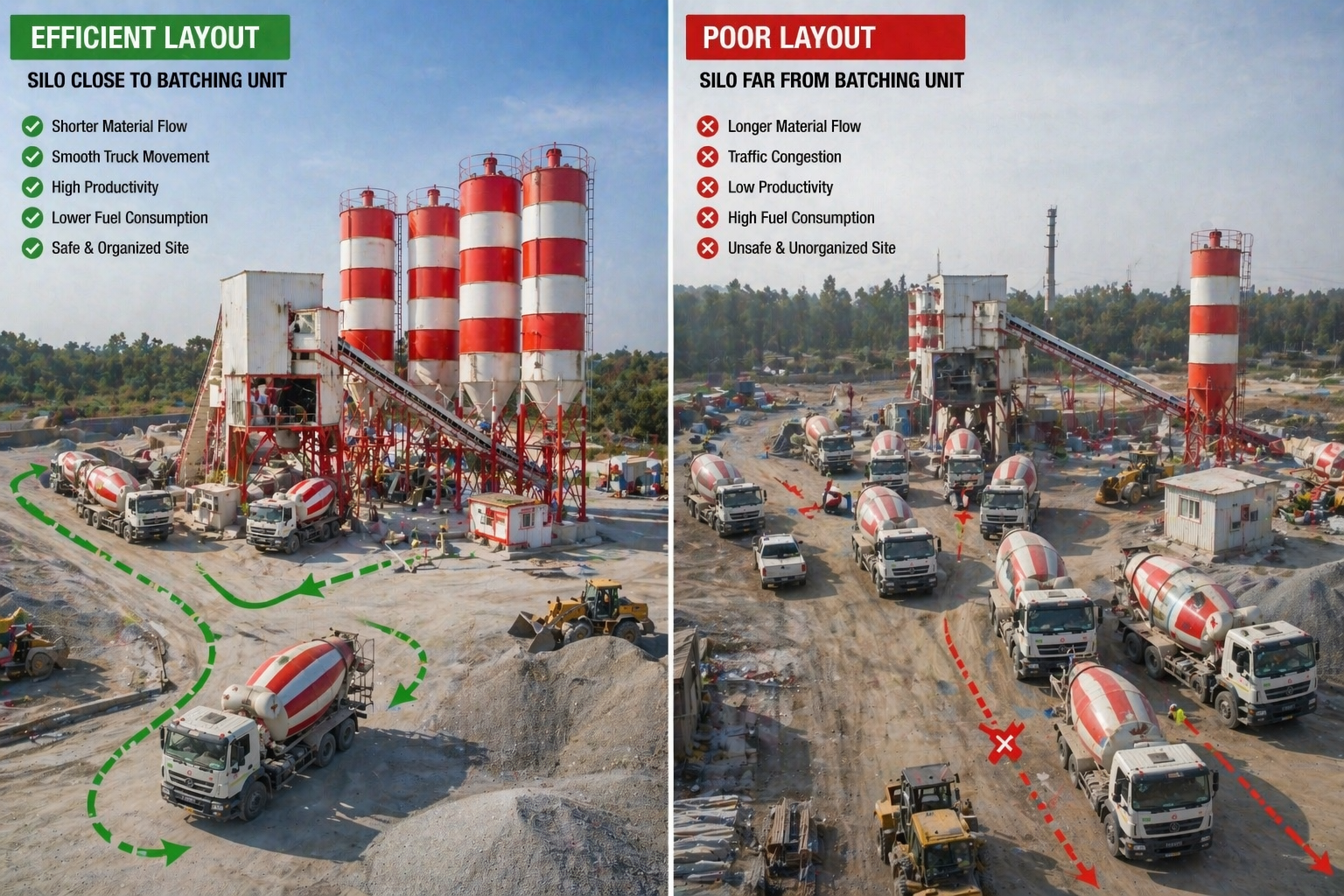
- Wrong Location & Layout Planning
The Mistake
Placing the silo without considering site workflow, logistics, and accessibility.
Real Impact
- Increased loading/unloading time
- Traffic congestion for cement tankers
- Inefficient batching plant operation
- Safety risks on site
Why It Happens
Silo placement is often decided last, after other infrastructure is already set.
What You Should Do
Plan silo placement early in your site layout:
- Keep it close to the batching unit
- Ensure easy access for bulk cement tankers
- Maintain safe distance from high-traffic zones
- Consider vertical vs horizontal silo depending on space constraints
A well-placed silo improves overall site productivity.
- Ignoring Dust Control & Safety Systems
The Mistake
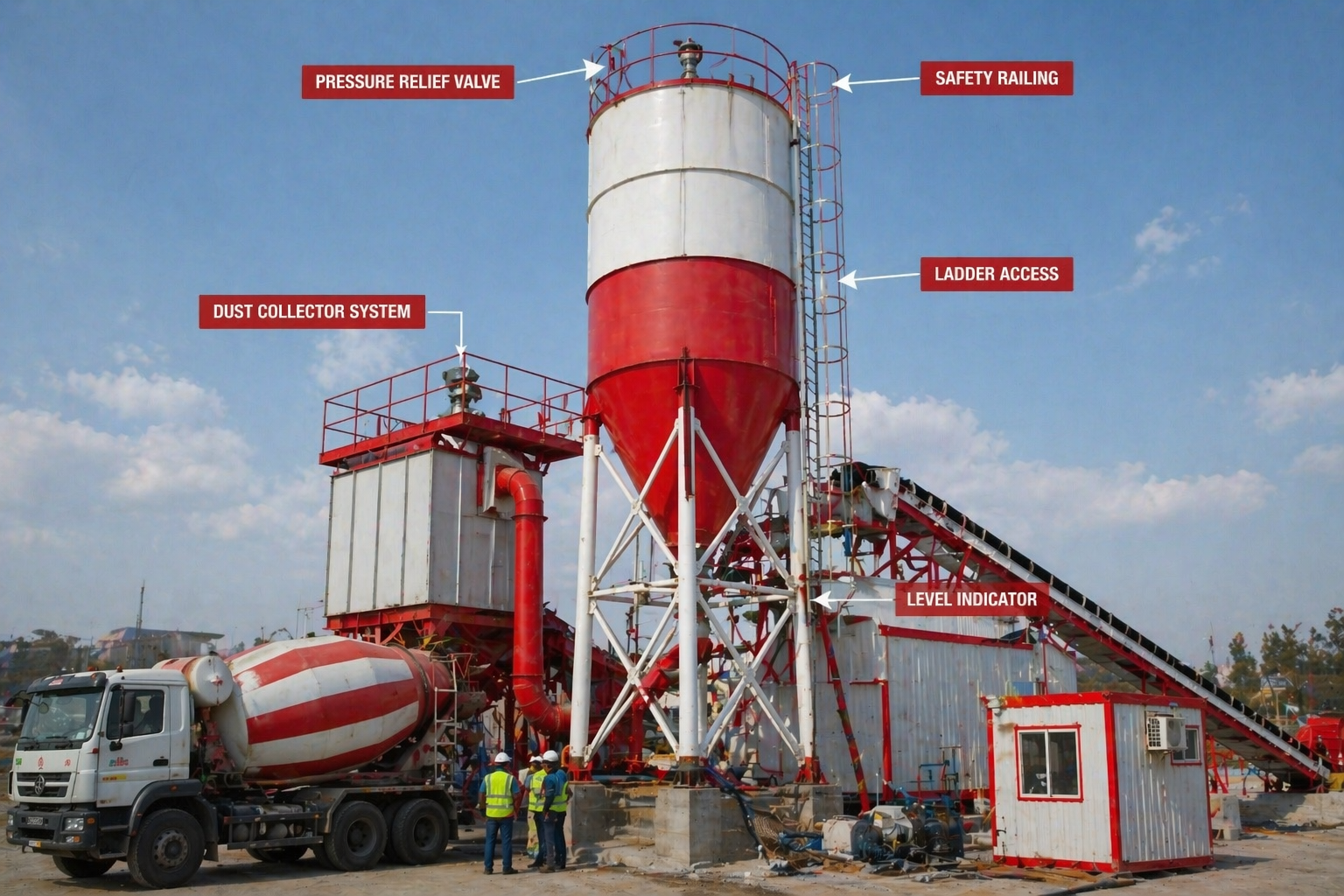
Skipping essential components like dust collectors, pressure relief valves, and level indicators.
Real Impact
- Environmental compliance issues
- Health hazards for workers
- Cement loss due to dust leakage
- Risk of overpressure accidents
Why It Happens
To reduce initial cost, many installations skip “non-essential” components.
What You Should Do
Always include:
- Dust collector system – prevents air pollution
- Pressure relief valve – avoids silo damage
- Level indicators (high & low) – prevents overflow or empty runs
- Safety railing & ladder access
Safety systems are not an upgrade – they are a necessity.
Final Thoughts
A cement silo is not just a storage unit – it is a core operational asset that directly influences your construction efficiency, cost control, and project timelines.
Avoiding these five mistakes can help you:
- Reduce downtime
- Optimize material usage
- Improve batching accuracy
- Extend equipment lifespan
- Ensure safer site operations
Looking to Install the Right Cement Silo?
If you’re planning a new installation or upgrading your existing setup, working with the right engineering partner makes all the difference.
Shrinathji Infracon provides high-performance cement silo solutions designed for real-world construction challenges – from accurate capacity planning to robust installation and long-term reliability.
Get in touch today to ensure your next project runs without bottlenecks.
 English
 Hindi
Hindi Arabic
 Chinese (Simplified)
 Dutch
Dutch French
 German
 Italian
 Portuguese
 Russian
 Spanish