


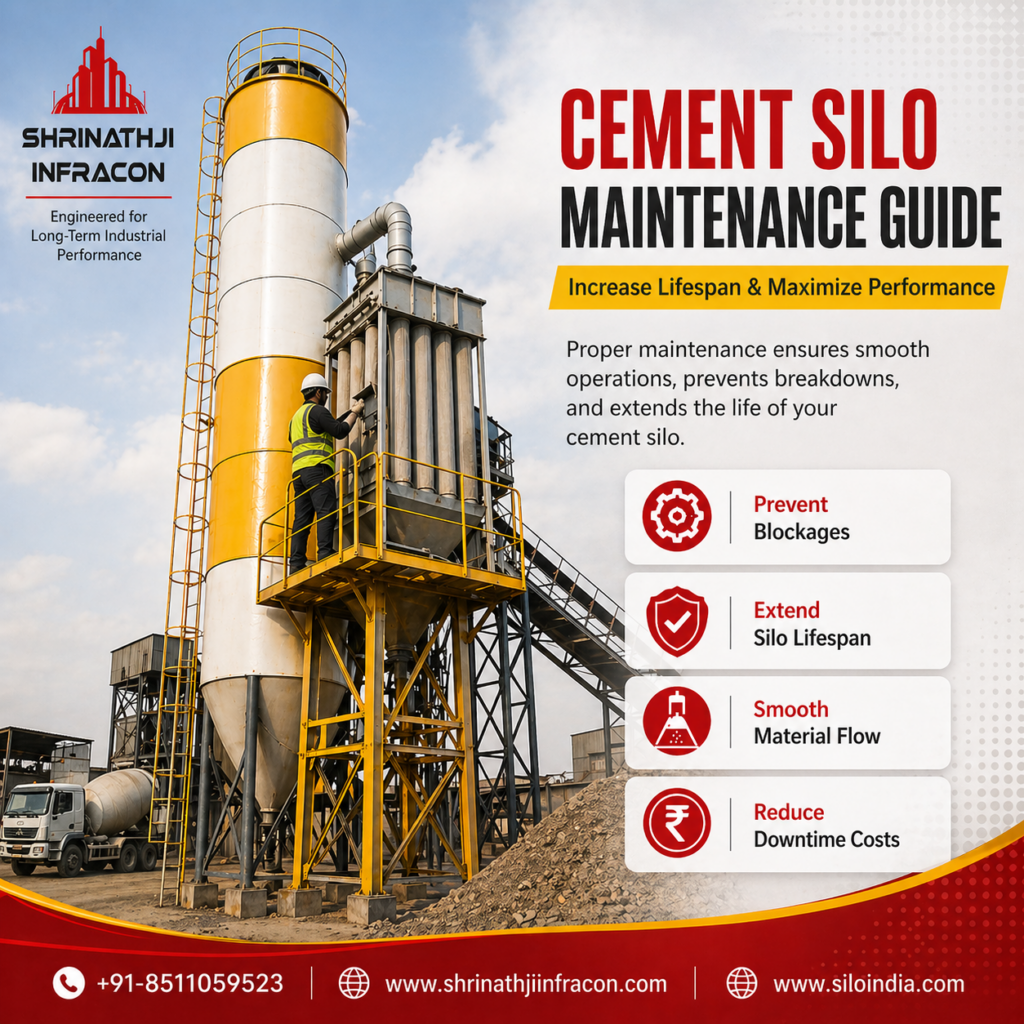
Cement silos are critical assets in construction sites, RMC plants, and infrastructure projects. While most businesses focus on installation and capacity, maintenance often gets overlooked – leading to costly failures and reduced efficiency.
A well-maintained cement silo ensures smooth operations, prevents material loss, and significantly extends equipment lifespan.
This guide covers practical, non-generic maintenance strategies to help you maximize performance and avoid downtime.
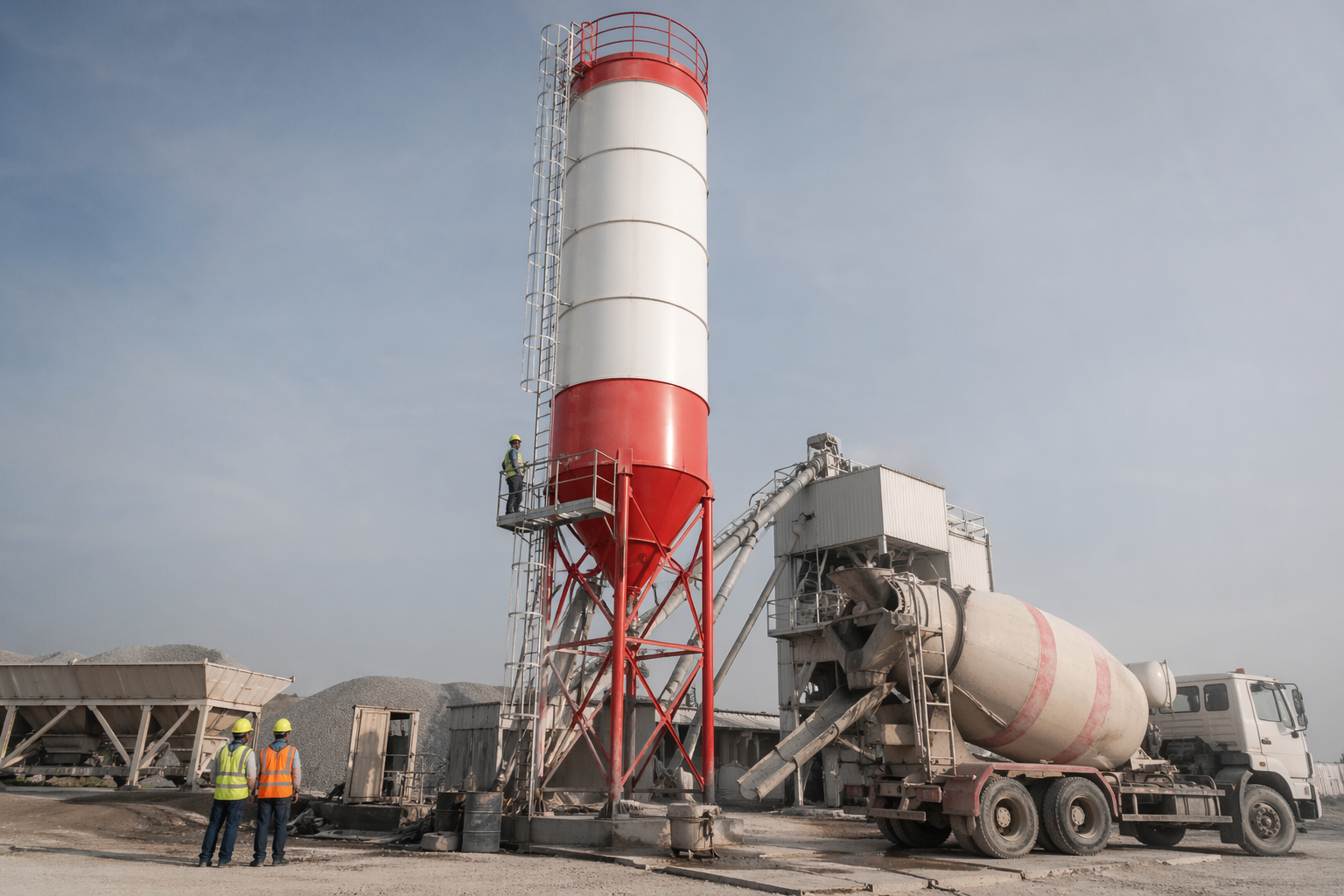
Why Cement Silo Maintenance is Important
Cement silos operate under continuous stress due to:
- Repeated loading and unloading cycles
- Exposure to environmental conditions
- Internal air pressure fluctuations
- Fine dust accumulation
Without proper maintenance, this can result in:
- Cement blockages
- Structural corrosion
- Equipment breakdown
- Unexpected downtime
The impact is direct: higher operational costs and reduced productivity.
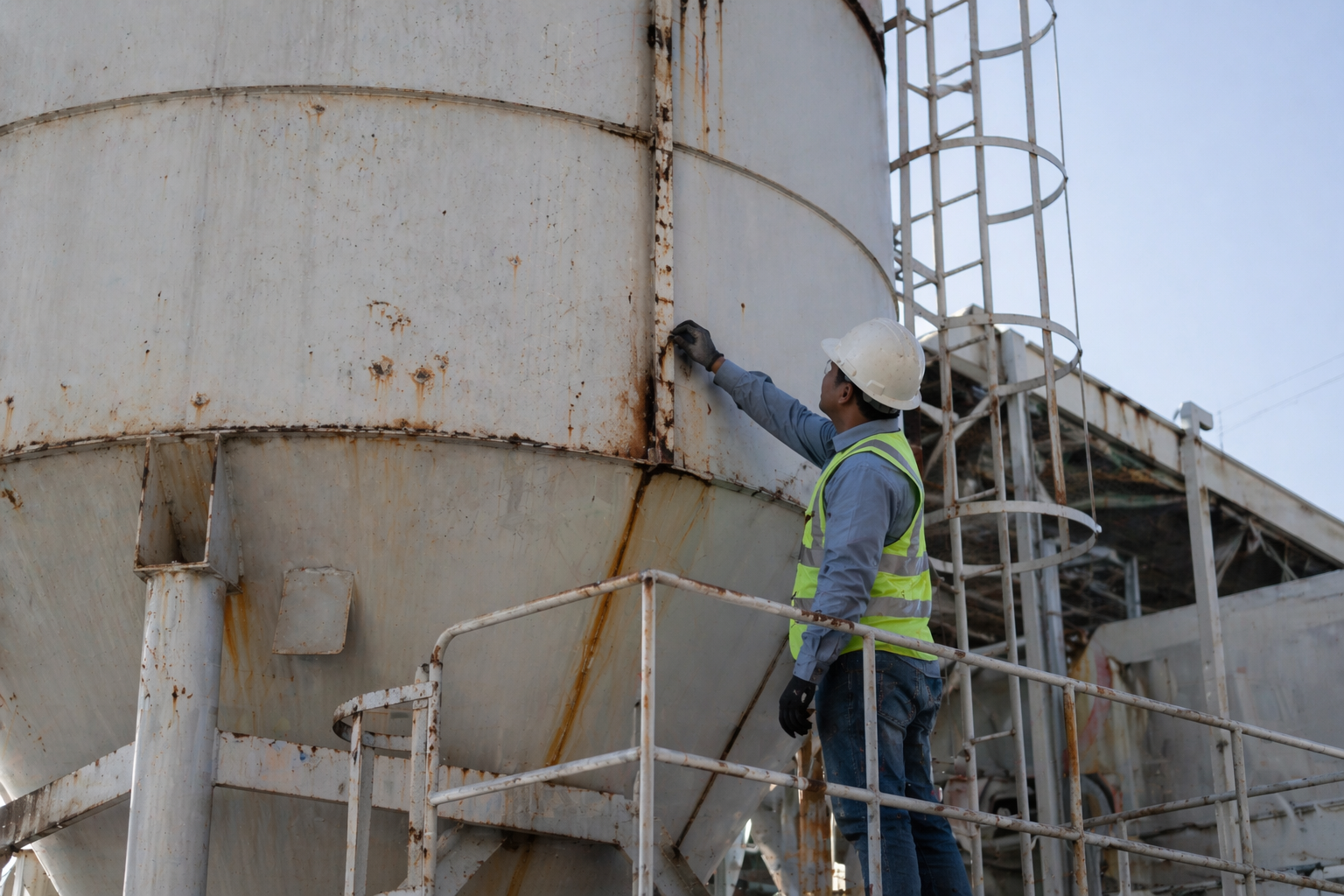
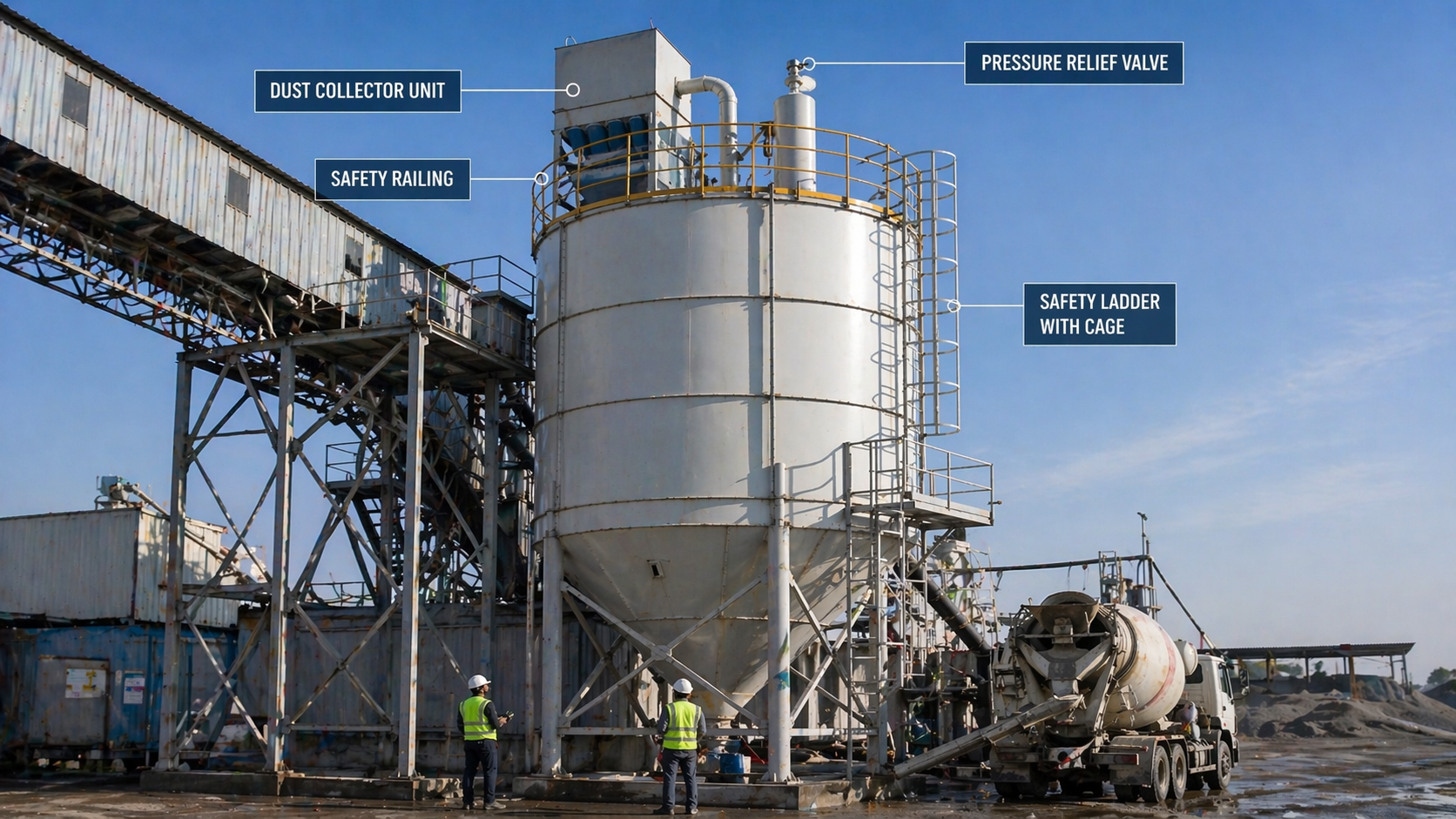
- Regular Structural Inspection
The structure of the silo must be checked consistently to prevent long-term damage.
What to Inspect:
- Rust or corrosion on the silo body
- Cracks in weld joints
- Loose bolts and anchor fasteners
- Condition of ladder, railing, and platforms
Best Practice:
Apply anti-corrosion coating every 6–12 months based on site conditions to prevent steel degradation.
- Dust Collector Maintenance
Dust collectors are essential for maintaining internal pressure balance.
Common Problems:
- Clogged filter bags
- Reduced airflow
- Pressure build-up inside the silo
Maintenance Steps:
- Clean filter bags regularly (weekly or bi-weekly)
- Replace damaged filters immediately
- Check pulse jet system performance
Key Insight:
A poorly maintained dust collector can lead to pressure imbalance and structural damage.
- Prevent Cement Blockages
Material flow issues are among the most common silo problems.
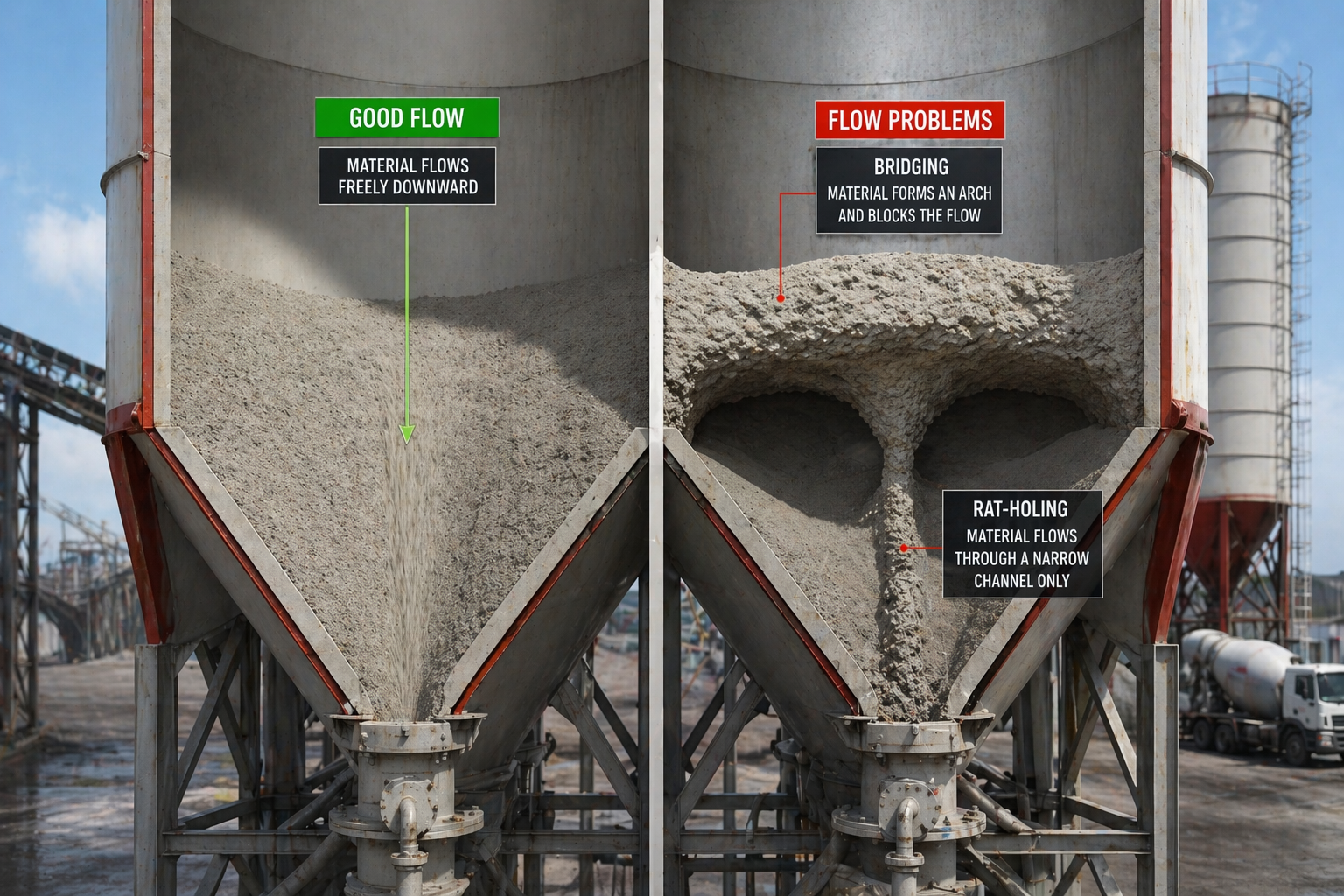
Types of Blockages:
- Bridging: Cement forms a hard arch inside
- Rat-holing: Cement flows through a narrow channel only
Preventive Measures:
- Install aeration pads or fluidizers
- Use vibrators where necessary
- Avoid storing cement for long durations
- Control moisture levels strictly
Important Note:
Even small amounts of moisture can cause cement to harden and block flow.
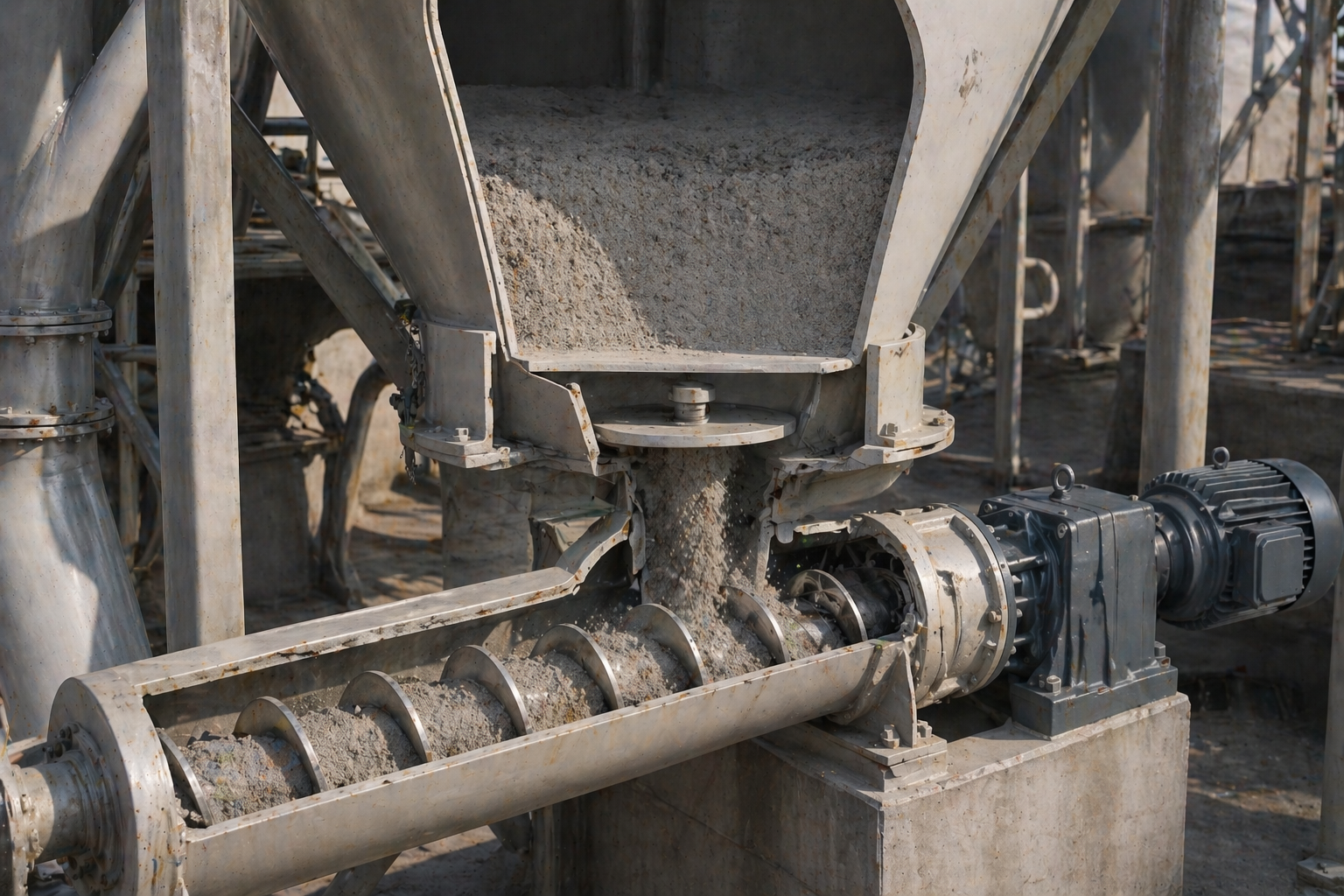
- Screw Conveyor and Discharge System Maintenance
The discharge system directly affects your operational efficiency.
Components to Check:
- Screw conveyor alignment
- Motor and gearbox condition
- Discharge valves
Maintenance Checklist:
- Lubricate bearings regularly
- Inspect screw blades for wear
- Monitor for unusual noise or vibration
Warning Sign:
Reduced discharge speed often indicates an upcoming failure.
- Pressure Relief Valve Maintenance
This is one of the most critical safety components in a cement silo.
Why It Matters:
During loading, air pressure builds inside the silo. If not released properly, it can damage the structure.
Maintenance Actions:
- Test valve functionality monthly
- Clean accumulated dust
- Replace faulty valves immediately
Failure of this component can lead to serious safety risks.
- Moisture Control and Storage Management
Moisture is one of the biggest threats to cement quality.
Preventive Steps:
- Ensure airtight sealing of the silo
- Inspect inlet pipes and covers
- Avoid long-term storage of cement
- Use moisture control systems if needed
Rule:
Fresh cement ensures better flow and performance. Avoid prolonged storage.
- Electrical and Sensor System Monitoring
Modern silos rely on automated systems for efficient operation.
Monitor:
- Level indicators
- Pressure sensors
- Alarm systems
Risks of Neglect:
- Overfilling
- Pressure imbalance
- System shutdown
Regular monitoring ensures uninterrupted operation.
Recommended Maintenance Schedule
| Frequency | Tasks |
| Daily | Check material flow and unusual sounds |
| Weekly | Clean dust collector and inspect exterior |
| Monthly | Check valves, sensors, and joints |
| Quarterly | Full system inspection and lubrication |
| Yearly | Anti-corrosion treatment and deep servicing |
Common Mistakes to Avoid
- Ignoring early warning signs
- Skipping dust collector maintenance
- Overloading the silo
- Storing cement for extended periods
- Using low-quality components
Conclusion
Cement silo maintenance is essential for ensuring long-term performance, safety, and efficiency.
A properly maintained silo:
- Increases lifespan
- Reduces downtime
- Maintains consistent material flow
- Improves overall productivity
Regular inspection, timely servicing, and the use of quality components can make a significant difference in how your silo performs over time.
When it comes to reliable cement silo solutions, Shrinathji Infracon stands out with its focus on durability, engineering precision, and real-world site performance. Whether you are planning a new installation or upgrading your existing setup, choosing the right partner ensures long-term efficiency and peace of mind.
 English
 Hindi
Hindi Arabic
 Chinese (Simplified)
 Dutch
Dutch French
 German
 Italian
 Portuguese
 Russian
 Spanish