


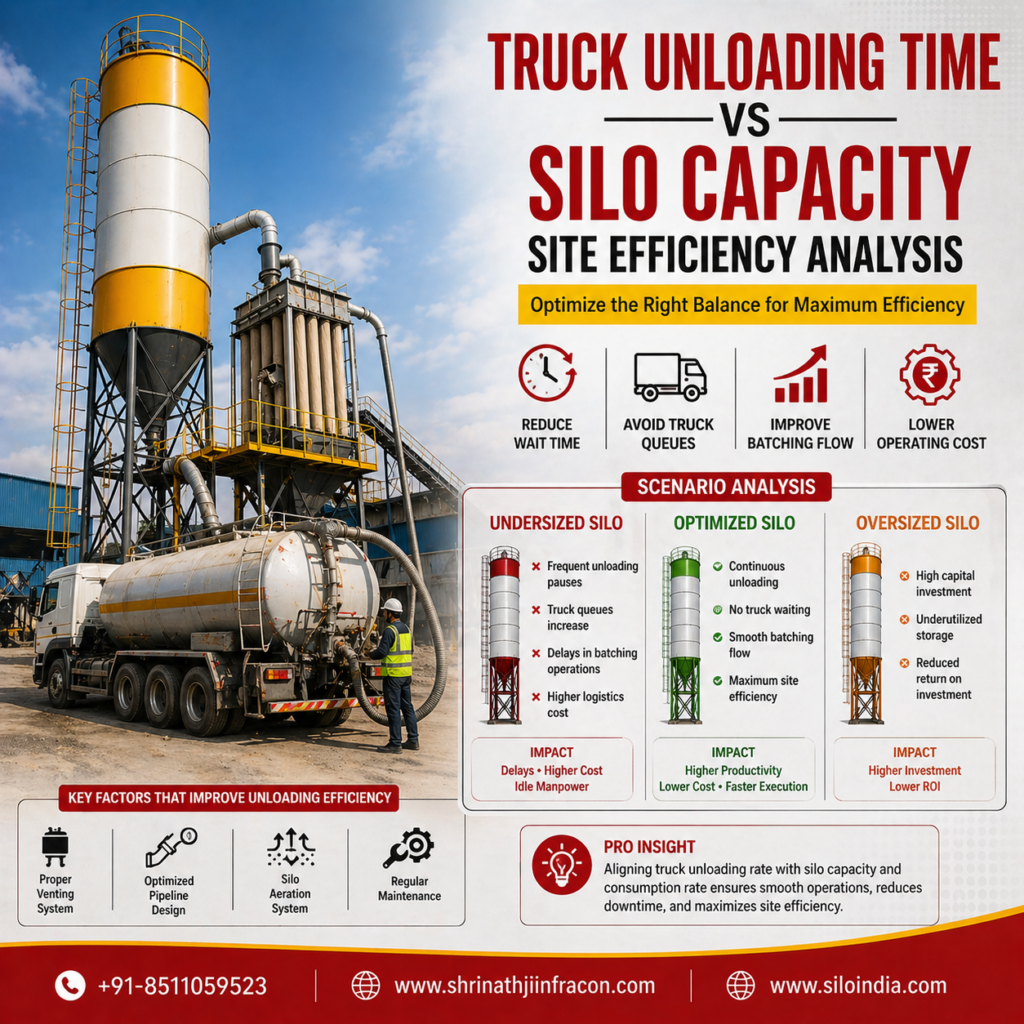
In construction and RMC operations, one of the most overlooked efficiency factors is the relationship between truck unloading time and cement silo capacity. Most project delays, idle labor costs, and batching interruptions are not caused by supply shortages – but by poor synchronization between incoming material flow and storage capability.
This blog breaks down the real-world impact of unloading time vs silo capacity and how optimizing this relationship can dramatically improve site efficiency.
Why This Relationship Matters
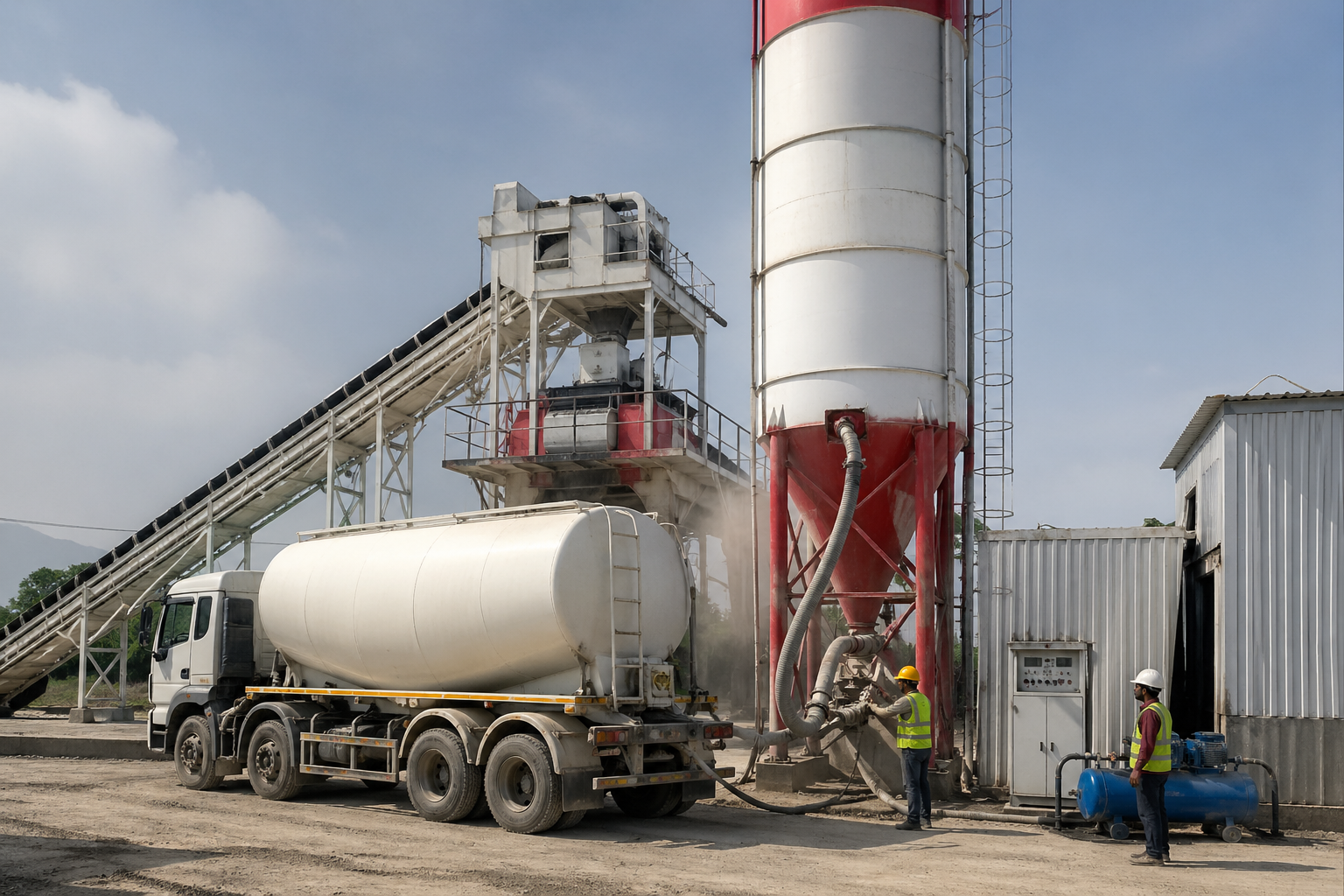
At any active construction or batching site, cement arrives in bulk tanker trucks. These trucks need to:
- Connect to the silo system
- Unload pneumatically
- Exit quickly to maintain logistics flow
If your silo cannot accept material at the same rate trucks deliver it, the entire system slows down.
Result:
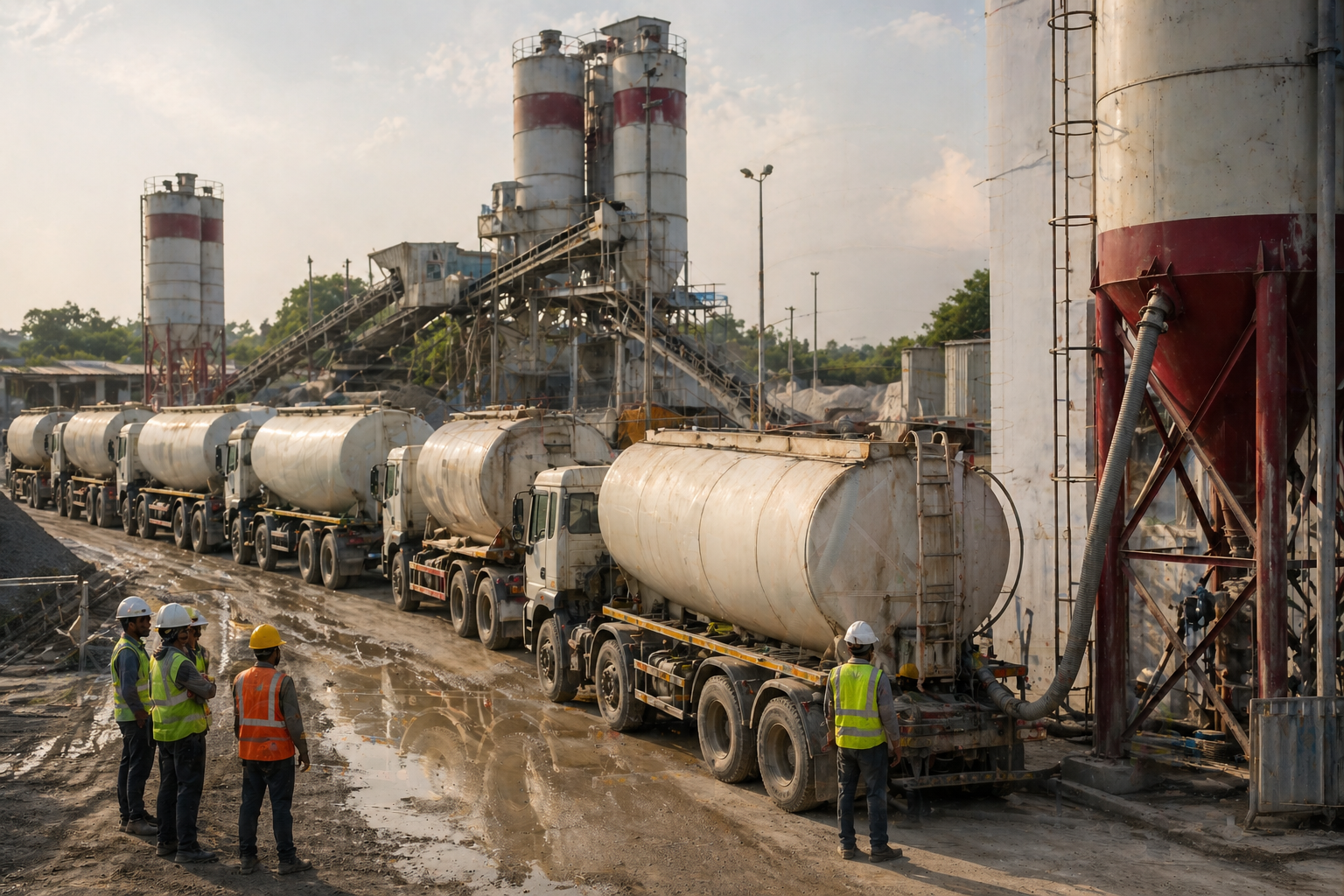
- Truck queues
- Increased demurrage charges
- Project delays
- Inefficient batching cycles
Understanding Truck Unloading Time
Typical unloading time depends on:
- Compressor pressure (airflow efficiency)
- Pipeline design (length, bends, diameter)
- Silo intake system (filter & venting capacity)
- Material condition (moisture, lump formation)
Industry Benchmark:
- 25–35 tons truck → 30 to 60 minutes unloading time
But here’s the catch:
Even if a truck can unload fast, your silo must be able to receive material at the same speed.
Role of Silo Capacity in Efficiency
Silo capacity is not just about “how much cement you can store.”
It directly affects:
- Absorption rate of incoming cement
- Buffer stock during peak operations
- Batching continuity
Key Insight:
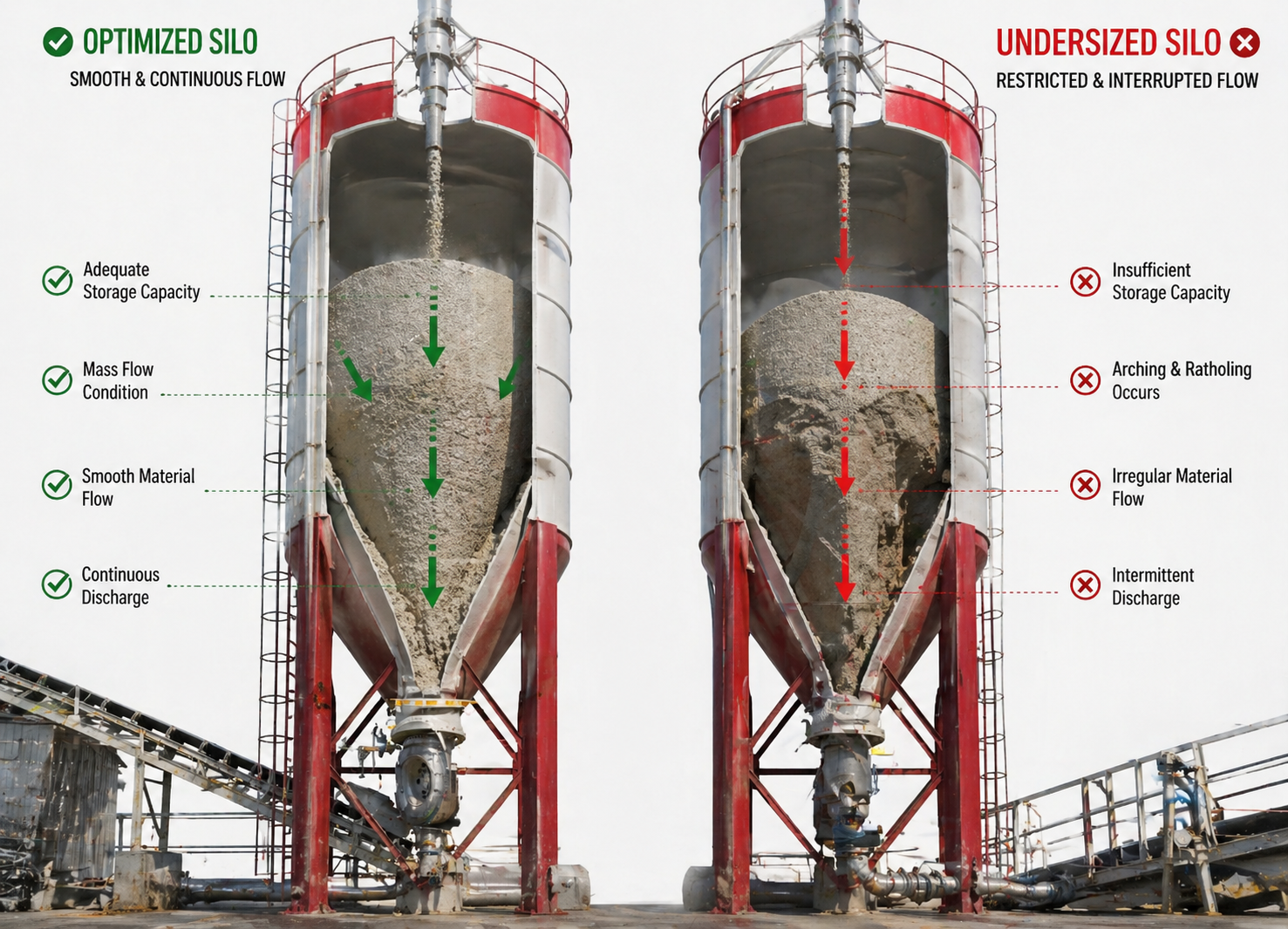
A silo with insufficient capacity creates intermittent unloading, forcing trucks to stop and restart – increasing unloading time and reducing throughput.
The Critical Balance: Flow Rate vs Storage
To optimize site performance, you must align:
Truck Unloading Rate ≈ Silo Intake + Consumption Rate
If this balance breaks, you face bottlenecks.
Scenario Analysis:
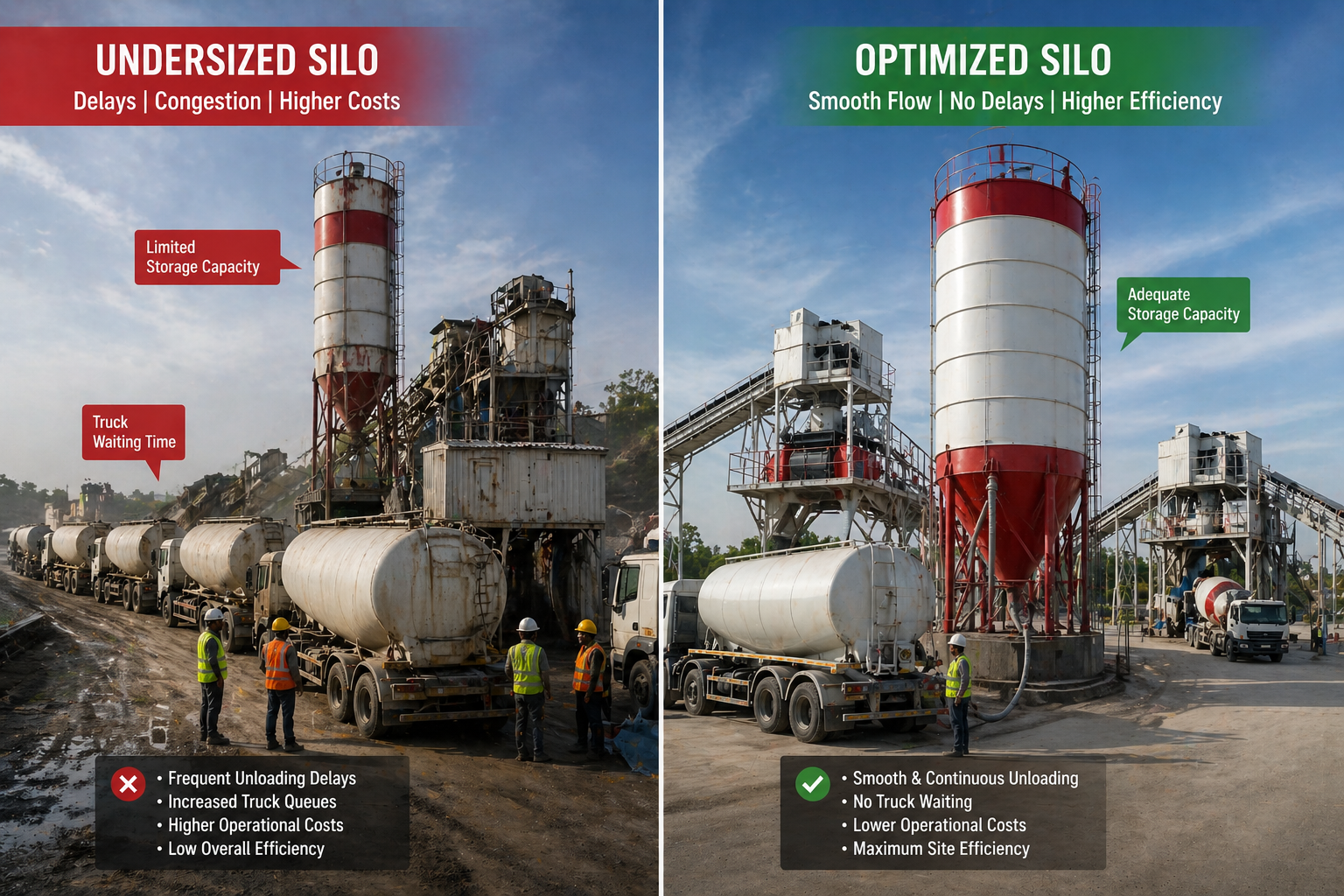
- Undersized Silo
- Trucks arrive faster than silo empties
- Unloading pauses frequently
- Queue builds up
Impact:
- 2–3 trucks waiting
- Higher logistics cost
- Idle manpower
- Oversized Silo
- No unloading delay
- But capital investment is high
- Underutilized storage
Impact:
- Reduced ROI
- Unnecessary infrastructure cost
- Optimized Silo (Ideal Case)
- Continuous unloading
- No truck waiting
- Smooth batching
Impact:
- Maximum site efficiency
- Reduced cost per ton
- Faster project execution
Real Site Calculation (Practical Example)
Let’s break it down:
- Daily cement requirement = 120 tons
- Truck capacity = 30 tons
- Trucks per day = 4 trucks
If each truck takes ~45 minutes to unload:
- Total unloading time = 3 hours/day
Now, if your silo capacity is only 50 tons:
- First truck unloads fully
- Second truck partially unloads
- Third truck waits until batching consumes cement
Result: Bottleneck created
Optimized Approach:
- Silo capacity = 150–200 tons
- Allows:
- Full unloading of multiple trucks
- Buffer for peak demand
- Continuous batching
Factors That Improve Unloading Efficiency
- Proper Venting System
Dust collectors and pressure relief valves must handle incoming airflow efficiently.
- Optimized Pipeline Design
- Avoid sharp bends
- Maintain correct diameter
- Reduce friction losses
- Silo Aeration System
Air pads ensure smooth cement flow and prevent blockages.
- Regular Maintenance
Clogged filters or worn-out valves slow down unloading significantly.
Hidden Costs of Poor Planning
Ignoring this relationship leads to:
- Truck detention charges
- Fuel wastage
- Labor inefficiency
- Delayed project timelines
In large infrastructure projects, this can translate into lakhs of rupees lost per month.
Pro-Level Insight (Industry Reality)
Most buyers select silo capacity based on:
- Budget
- Available space
But professionals decide based on:
- Peak unloading cycles
- Supply frequency
- Batching demand
This is where most sites go wrong.

Conclusion
Truck unloading time and silo capacity are closely linked to how efficiently a site operates. When both are aligned correctly, operations remain smooth, delays are minimized, and overall project flow becomes more predictable. On the other hand, even small mismatches can gradually lead to inefficiencies that impact timelines and costs.
In practice, achieving this balance requires more than just selecting a silo based on capacity alone – it involves understanding site demand, supply frequency, and real operational conditions.
This is where experienced industry players like Shrinathji Infracon bring value. With a practical understanding of on-ground challenges and system design, the focus remains on creating setups that work efficiently in real conditions, not just on paper.
Over time, it is this attention to detail and planning that helps construction and RMC sites operate with greater consistency, control, and confidence.
 English
 Hindi
Hindi Arabic
 Chinese (Simplified)
 Dutch
Dutch French
 German
 Italian
 Portuguese
 Russian
 Spanish