


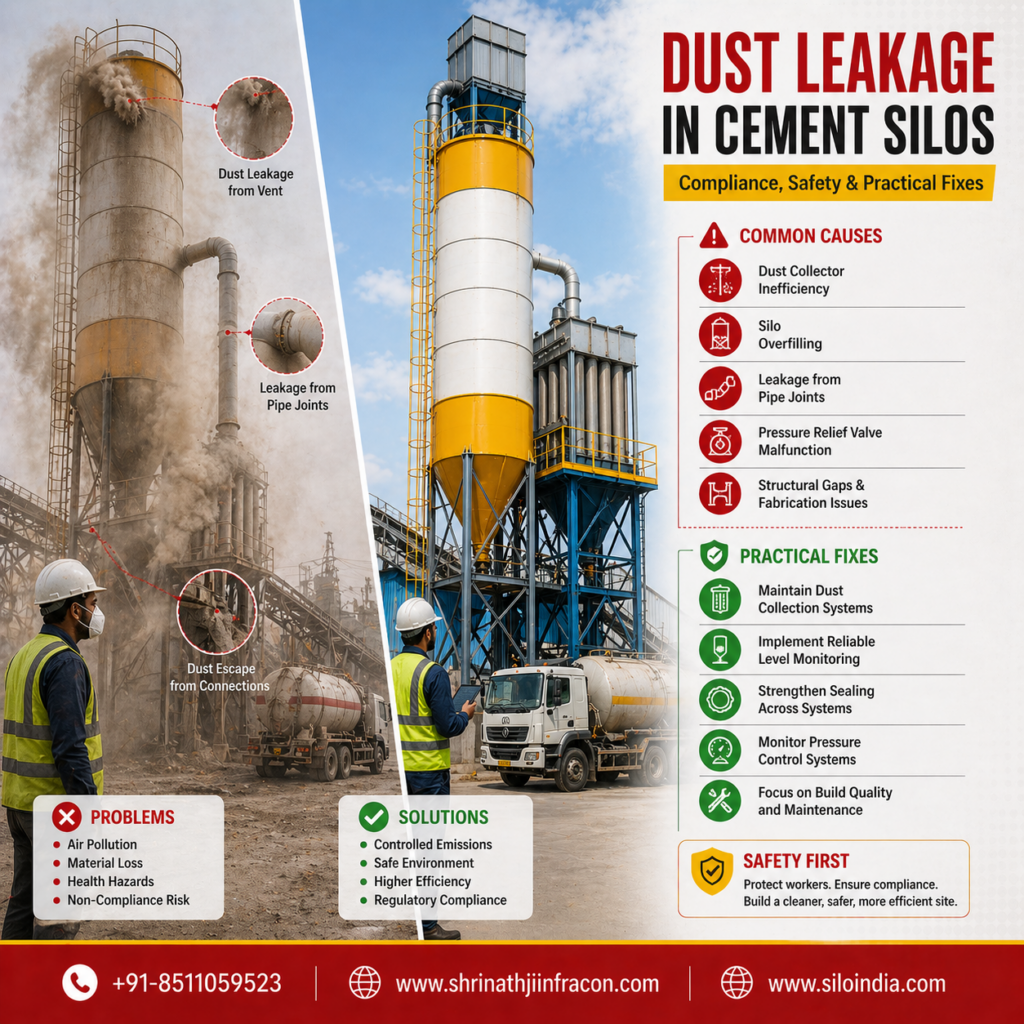
In cement handling systems, dust leakage is often noticed only when it becomes visible. By that stage, the issue has already started affecting compliance, safety, and operational efficiency. In RMC plants and construction sites, controlling dust is not just about cleanliness – it directly connects to performance, regulatory standards, and long-term cost control.
This article explores the real causes behind dust leakage in cement silos, the compliance expectations, associated risks, and practical ways to manage it effectively on-site.
Why Dust Leakage Needs Attention
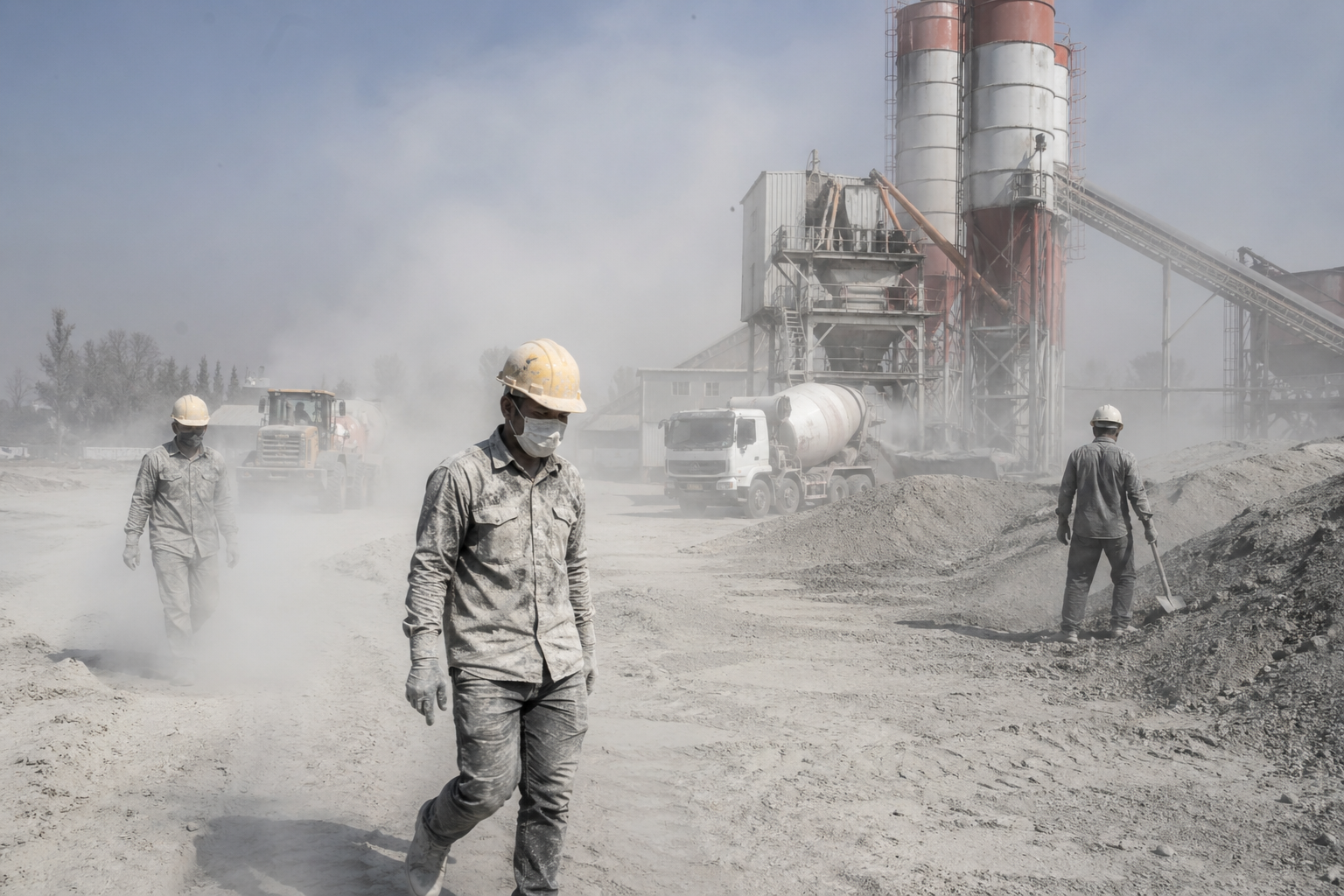
Cement is a fine particulate material, and even minor leakage points can release significant dust into the environment. Over time, this leads to:
- Degradation of air quality
- Material loss during handling
- Reduced efficiency of equipment
- Increased maintenance requirements
In many cases, these effects build gradually, making the problem harder to trace back to its source.
Compliance Expectations in Cement Handling
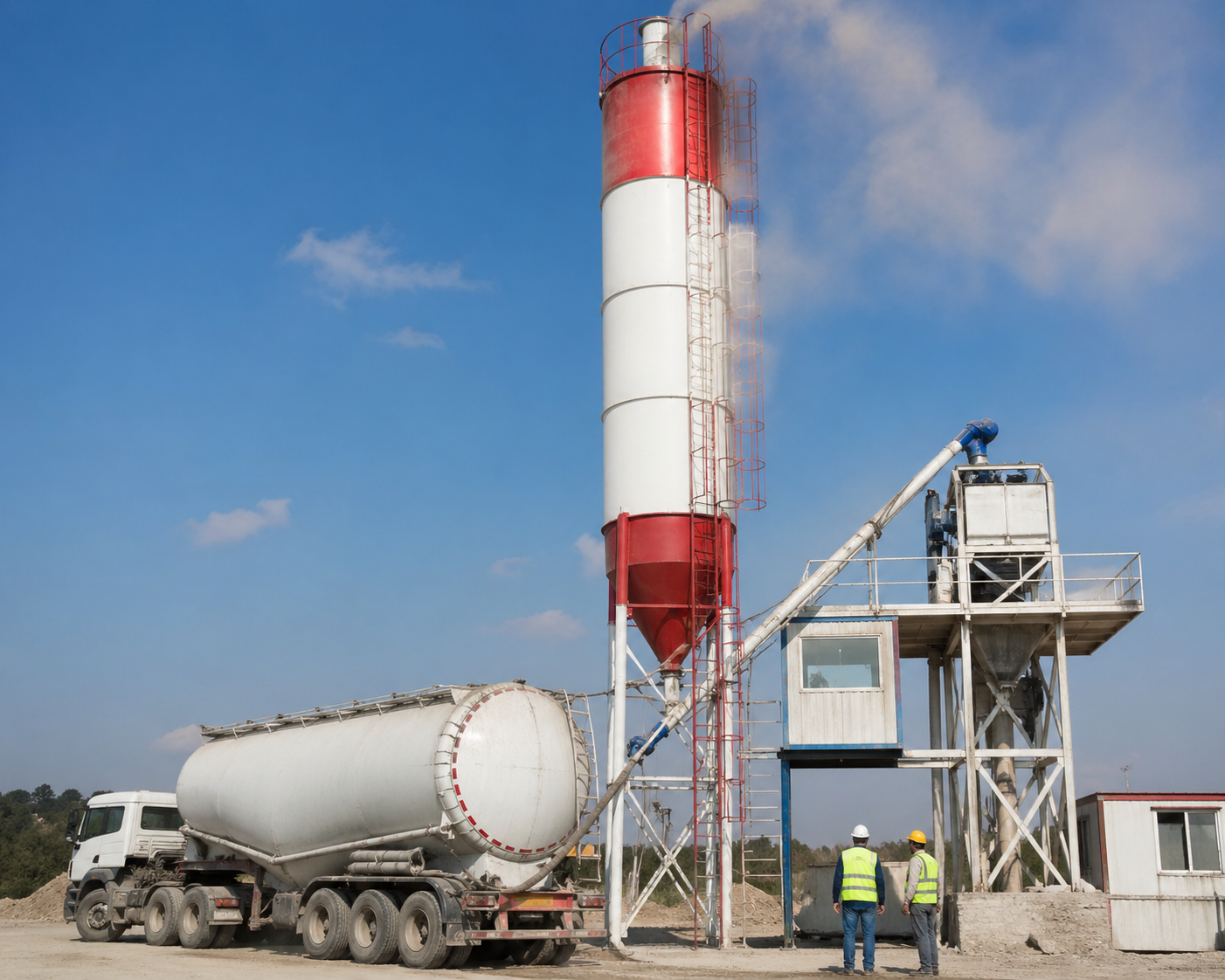
Dust emissions from cement silos fall under environmental regulations monitored by bodies such as the Central Pollution Control Board.
Typical expectations include:
- Controlled particulate emissions within permissible limits
- Functional dust collection systems
- No visible dust discharge during operations
- Proper sealing across storage and conveying systems
Non-compliance may not always show immediate consequences, but inspections and audits often bring these issues to the surface at critical project stages.
Common Causes of Dust Leakage
- Dust Collector Inefficiency
Dust collectors play a central role in controlling emissions. When filters become clogged or cleaning mechanisms fail, the system loses its ability to trap fine particles effectively. Over time, this allows dust to escape during filling operations.
- Silo Overfilling
In the absence of accurate level monitoring, silos may reach their maximum capacity without timely intervention. This leads to pressure build-up, forcing dust to escape through vents, valves, or weak structural points.
- Leakage from Pipe Joints
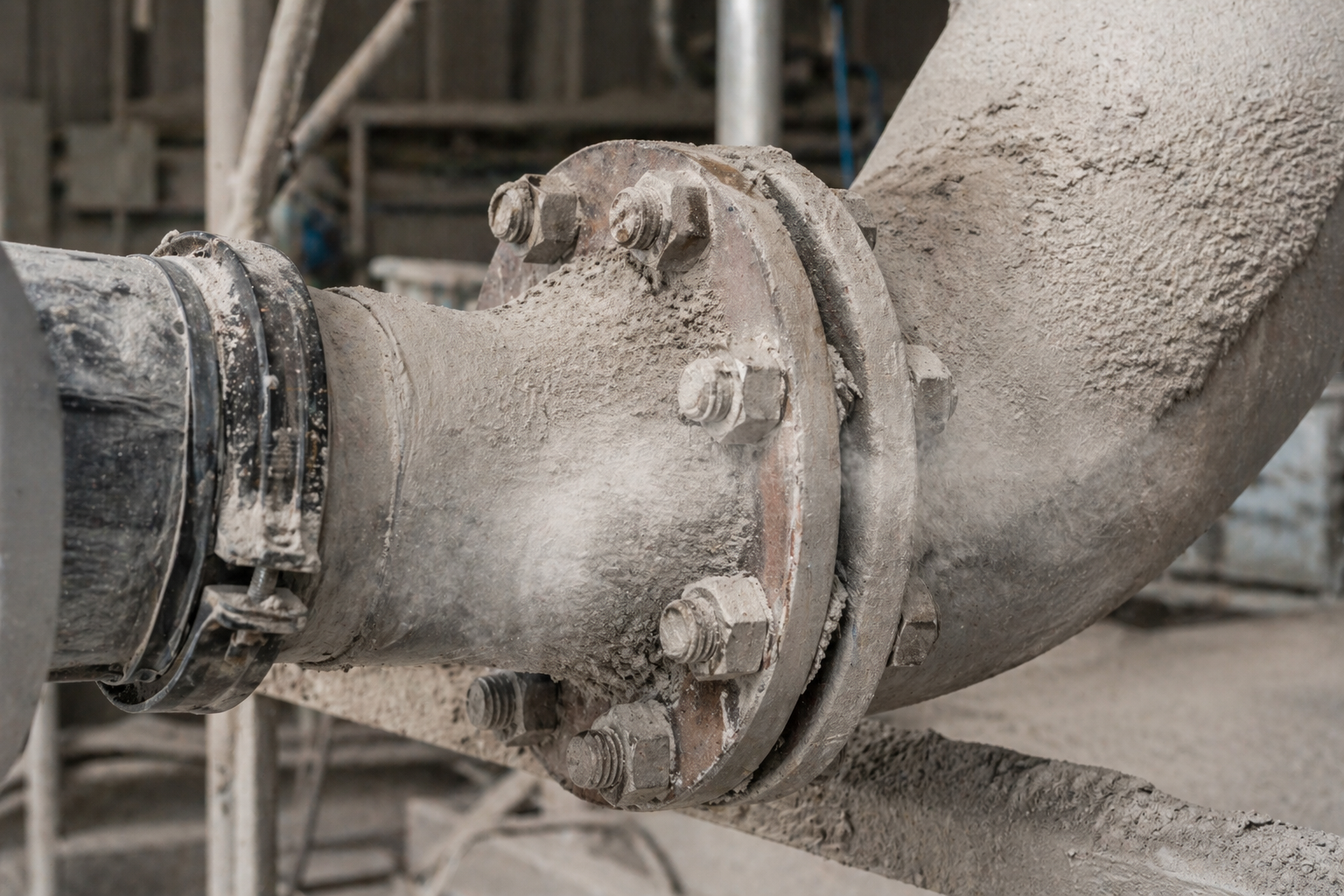
Pneumatic conveying systems rely on airtight connections. Even minor gaps in flanges, gaskets, or couplings can result in continuous dust leakage during unloading cycles. These leaks often go unnoticed but contribute to long-term inefficiencies.
- Pressure Relief Valve Malfunction
Pressure relief valves are designed to protect the silo from excess pressure. However, if not calibrated or maintained properly, they may release dust unnecessarily or fail to regulate internal pressure effectively.
- Structural Gaps and Fabrication Issues
Over time, or due to poor fabrication standards, small cracks, weld gaps, or misalignments may develop in the silo structure. These imperfections become leakage points under pressure conditions, especially during high-volume operations.
Safety Implications of Dust Leakage
Dust leakage has broader implications beyond operations:
- Continuous exposure to cement dust may affect respiratory health
- Accumulated dust can reduce visibility in active work zones
- Settled dust increases the risk of slips and falls
- Fine particles may enter machinery, affecting performance and lifespan
These factors, when combined, gradually impact both workforce safety and equipment reliability.

Practical Ways to Manage Dust Leakage
Maintain Dust Collection Systems
Routine inspection and timely replacement of filters help maintain efficiency. Monitoring system performance before visible leakage appears often prevents larger issues.
Implement Reliable Level Monitoring
Using advanced level sensors and alarms allows better control over silo capacity and prevents overfilling situations.
Strengthen Sealing Across Systems
Ensuring proper sealing of all joints, pipelines, and connections reduces the chances of continuous leakage during operations.
Monitor Pressure Control Systems
Regular checks on pressure relief valves and venting systems help maintain balance within the silo and avoid unnecessary discharge.
Focus on Build Quality and Maintenance
High-quality fabrication combined with periodic inspection reduces the formation of structural leakage points over time.

A Practical Perspective
Dust leakage in cement silos rarely originates from a single failure point. It tends to develop as a result of multiple small inefficiencies working together – often unnoticed until they begin affecting site performance or compliance outcomes.
A consistent approach toward monitoring, maintenance, and system design tends to make a measurable difference in controlling such issues. Over time, these practices contribute to smoother operations, reduced material loss, and a more controlled working environment.
In many industrial setups, a gradual shift toward better-designed silo systems, improved filtration mechanisms, and structured maintenance practices has shown noticeable improvements in both compliance and operational stability – something that continues to be observed across evolving infrastructure projects associated with Shrinathji Infracon.
 English
 Hindi
Hindi Arabic
 Chinese (Simplified)
 Dutch
Dutch French
 German
 Italian
 Portuguese
 Russian
 Spanish