


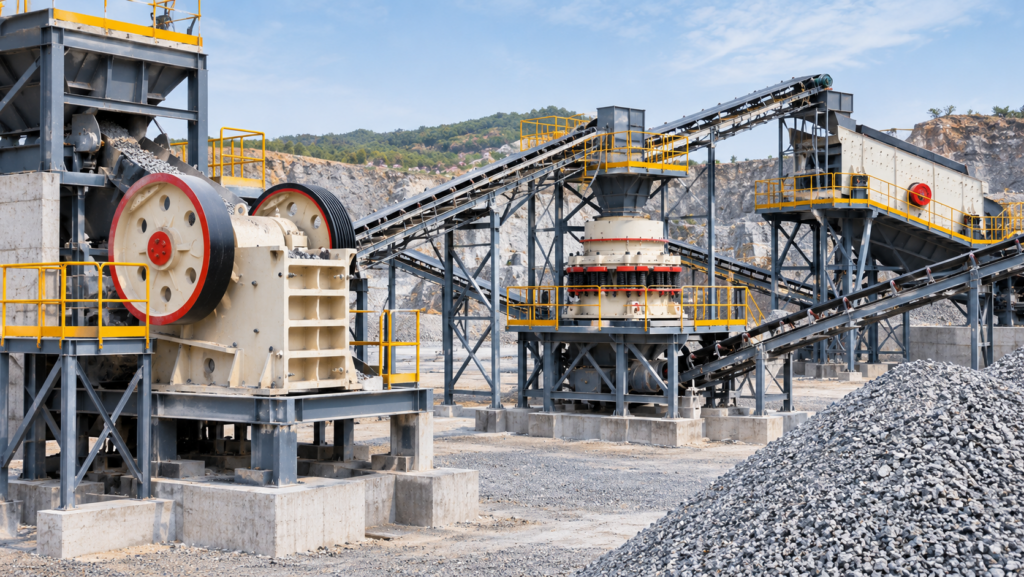
Efficient material handling is essential for construction plants, ready-mix concrete facilities, stone crushing operations and industrial manufacturing units. Whether a plant is transporting cement powder, fly ash, crushed aggregates or other bulk materials, selecting the correct conveyor system directly affects production efficiency, maintenance requirements and operating costs.
Two commonly used solutions are screw conveyors and belt conveyors. Although both transport materials from one location to another, their operating principles, ideal applications and limitations are significantly different.
A screw conveyor may be the preferred solution for enclosed transfers of cement or fly ash, while a belt conveyor may be more suitable for moving large quantities of aggregates across a crusher plant.
Understanding these differences helps plant owners avoid unsuitable equipment selection and develop reliable material handling systems.
In this guide, we compare screw conveyor vs belt conveyor systems, covering their working principles, advantages, limitations, industrial applications and important purchasing considerations.
What Is a Screw Conveyor?
A screw conveyor is a mechanical bulk material handling device that uses a rotating helical screw, commonly called an auger or screw flight, to move material through a tube or trough.
As the screw rotates, material advances along the conveyor toward the discharge point.
Screw conveyors are commonly used for handling powders, granules and other bulk solids, provided the equipment is designed for the material’s properties.
Typical applications include:
- Cement transfer from storage silos to batching equipment.
- Fly ash handling systems.
- Powder and granular material movement.
- Industrial processing applications requiring contained transfer.
- Short-distance material transportation between connected equipment.
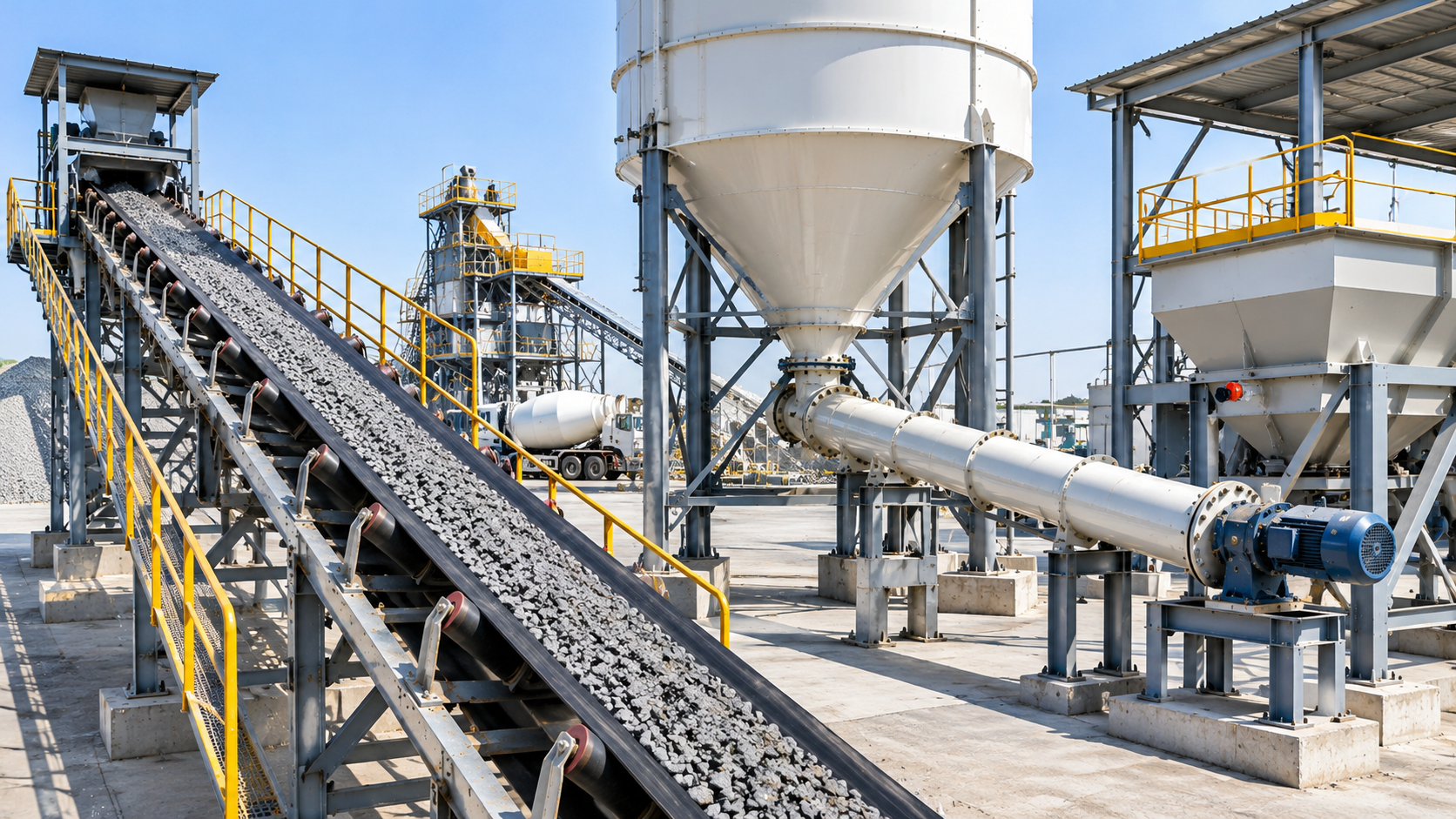
In concrete batching plants, a tubular screw conveyor is often installed between the cement silo discharge and the weighing or batching arrangement.
The enclosed construction helps contain material and reduce dust escape when the complete system, including its connections and seals, is properly designed and maintained.
What Is a Belt Conveyor?
A belt conveyor is a material handling system that uses a continuous moving belt supported by rollers or a suitable sliding surface.
The belt travels around drive and return pulleys, carrying material between the loading and discharge points.
Belt conveyors are widely used in applications requiring continuous transportation of bulk solids over moderate or long distances.
Typical applications include:
- Stone crusher plants.
- Aggregate processing facilities.
- Sand and gravel transportation.
- Mining and quarry operations.
- Material transfer between crushers and screening machines.
- Stockpile formation and loading systems.
Heavy-duty belt conveyors can transport substantial quantities of aggregate when properly designed for the required capacity, material characteristics and plant layout.
For an introduction to industrial conveyor applications, read Shrinathji Infracon’s article on the importance of industrial conveyor systems.
Screw Conveyor vs Belt Conveyor: Key Differences
The main difference lies in the way each system transports material and the operating conditions for which it is generally suitable.
| Comparison | Screw Conveyor | Belt Conveyor |
|---|---|---|
| Working principle | Rotating helical screw moves material | Continuous moving belt transports material |
| Typical application | Powders and granular bulk solids | Aggregates and a wide range of bulk materials |
| Conveying distance | Commonly short to moderate distances | Suitable for moderate to long distances |
| Enclosure | Often fully enclosed | Open, covered or fully enclosed designs available |
| Capacity | Application-dependent; often used for controlled transfer | Can accommodate very high continuous throughput |
| Material degradation | Can cause greater agitation and particle breakage | Often provides gentler transportation |
| Maintenance considerations | Flights, bearings, seals and drive assemblies | Belt, rollers, pulleys, cleaners and tracking |
| Common construction application | Cement silo discharge | Crusher and aggregate plant transportation |
These comparisons describe typical applications, not universal limits. Actual suitability depends on equipment design, material characteristics, conveying geometry and required throughput.
1. Material Compatibility
The material being transported is one of the most important factors in conveyor selection.
When a Screw Conveyor Is Suitable
Screw conveyors are frequently selected for powders and granular materials such as cement and fly ash.
The enclosed configuration can be valuable where controlled material transfer and dust containment are important.
However, highly abrasive, sticky, cohesive or unusually large-particle materials may require specialised designs or a different conveying method.
When a Belt Conveyor Is Suitable
Belt conveyors are commonly used for transporting crushed stone, aggregates, sand and other bulk solids.
They can handle materials of different particle sizes and can be configured for substantial material flow rates.
However, extremely fine powders may need enclosed belt conveyor designs and appropriate dust management systems.
Practical example: In a construction plant, cement powder may be transported from a silo through a screw conveyor, while coarse aggregates are transported to processing equipment using a belt conveyor.
2. Conveying Distance and Plant Layout
Conveying distance directly influences the choice of material handling equipment.
Screw Conveyor Distance
Conventional screw conveyors are generally practical for relatively short transfer routes between equipment.
As conveyor length increases, mechanical considerations such as shaft support, bearing arrangements, torque and power requirements become increasingly important.
Inclined operation is possible, but the required design and capacity may change significantly with inclination.
Belt Conveyor Distance
Belt conveyors can be configured for longer material transfer distances.
They are particularly useful in large crusher plants where equipment is distributed across different processing zones.
Longer systems require appropriate belt tension, drive arrangements, structural support and alignment.
Selection principle: Use the actual plant layout and material transfer route rather than choosing a conveyor based on equipment price alone.
3. Dust Control and Material Spillage
Dust management is an important consideration in cement handling, batching and aggregate processing facilities.
Screw Conveyor Dust Control
An enclosed screw conveyor can help contain fine material during transportation.
However, dust leakage can still occur through damaged seals, loose connections, inspection openings or poorly maintained equipment.
Proper design and maintenance are necessary to achieve reliable containment.
Belt Conveyor Dust Control
Open belt conveyors are exposed at the loading, carrying and discharge sections.
Material spillage and dust generation may occur if transfer chutes, skirts, belt cleaners or loading arrangements are unsuitable.
Covered belts, enclosed conveyors, engineered transfer points and suitable dust control systems can reduce these issues.
For related guidance, see Shrinathji Infracon’s article on dust leakage and practical prevention measures in cement storage systems.
4. Capacity and Material Flow Requirements
Conveyor capacity must be selected according to the amount of material that needs to be transported within a specified period.
Capacity is often expressed in tonnes per hour (TPH) or as a volumetric flow rate.
For both conveyor types, the relationship between mass flow rate and volumetric flow rate depends on the bulk density of the material.
Mass flow rate (tonnes/hour) = Volumetric flow rate (m³/hour) × Bulk density (tonnes/m³).
For example, if a system must transport 30 tonnes of material per hour and the assumed bulk density is 1.5 tonnes per cubic metre, the required volumetric throughput is:
30 ÷ 1.5 = 20 m³/hour.
This is only a preliminary process calculation. It does not establish the conveyor’s final dimensions, motor power or operating speed.
Screw conveyor sizing must additionally account for material flow characteristics, trough loading, screw geometry, inclination and torque.
Belt conveyor sizing requires consideration of belt width, speed, cross-sectional loading, inclination, material properties and operating conditions.
Engineering references such as the KWS Screw Conveyor Engineering Guide provide information about the factors involved in proper equipment selection.
5. Installation and Maintenance Requirements
Both conveyor types require regular inspection and maintenance, but their main wear components differ.
Screw Conveyor Maintenance
Important maintenance areas include:
- Screw flights and shaft condition.
- Hanger bearings, where fitted.
- Drive motor and gearbox.
- End bearings and seals.
- Inlet and discharge connections.
- Material buildup and mechanical obstructions.
Because many screw conveyors are enclosed, maintenance access should be considered during equipment selection.
Belt Conveyor Maintenance
Important maintenance areas include:
- Belt alignment and tracking.
- Idler roller condition.
- Drive and return pulleys.
- Belt tension and splice integrity.
- Belt cleaning systems.
- Transfer chutes and skirt sealing.
For crusher plant installations, the maintenance schedule should also account for dust exposure, abrasive materials and extended operating hours.
Belt Conveyors in Crusher and Aggregate Plants
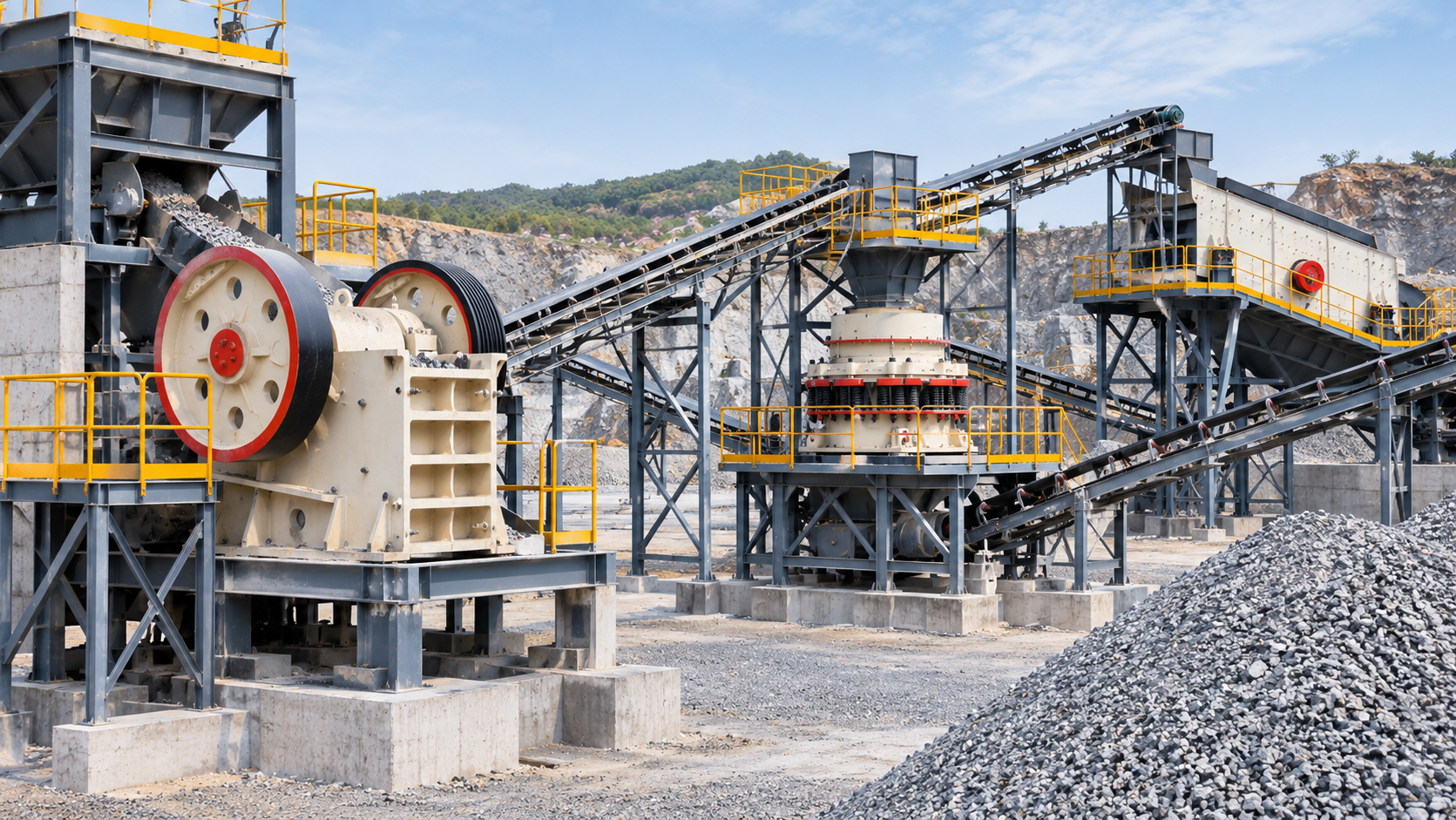
Crusher plants typically include different processing stages such as primary crushing, secondary crushing, screening and finished material stockpiling.
Belt conveyors connect these stages and allow continuous movement of material through the processing system.
For example, a jaw crusher may reduce incoming stone to a smaller size before a conveyor transports the material to another crushing or screening stage.
The conveyor arrangement must accommodate the required throughput, maximum material size and site layout.
Where dust and spillage are concerns, attention should also be given to loading points, guarding and cleaning arrangements.
For information about crusher equipment selection, explore Shrinathji Infracon’s guide to jaw crushers, cone crushers and VSI crushers.
Screw Conveyors in Cement Silo and Batching Plant Applications
In ready-mix concrete batching plants, screw conveyors are commonly used to transfer cement from storage silos to the weighing or batching system.
They offer a compact mechanical solution for transporting fine powders through a contained route.
The system must be correctly selected for the required delivery rate, conveyor length, inclination and stored material characteristics.
One important distinction is the difference between a screw conveyor and a screw feeder.
A screw conveyor is typically designed to transfer a regulated supply of material, while a purpose-designed screw feeder can meter material from a hopper or bin under flood-fed conditions.
These devices may appear similar, but their design requirements and operating conditions can differ.
When planning a cement storage installation, consider both the silo and its associated material discharge system.
Read Shrinathji Infracon’s guide on important things to check before buying a cement silo for additional purchasing considerations.
Which Conveyor Has Lower Operating Costs?
There is no universal answer to whether screw conveyors or belt conveyors are less expensive to operate.
The total cost depends on the material, distance, throughput, equipment size, energy requirements, maintenance needs and installation conditions.
A compact screw conveyor may be an economical solution for transferring cement over a short distance.
For a long-distance aggregate handling application, a correctly designed belt conveyor may offer better overall suitability.
Equipment selection should consider the total cost of ownership, including:
- Initial equipment purchase.
- Installation and civil works.
- Motor power and energy consumption.
- Routine maintenance and spare parts.
- Wear component replacement.
- Production interruptions and downtime.
- Dust control and cleaning arrangements.
Comparing purchase prices without evaluating the complete operating requirements may lead to higher long-term costs.
Common Mistakes When Selecting Industrial Conveyors
Several equipment selection mistakes can affect production reliability.
Ignoring Material Characteristics
The equipment must be suitable for the material’s bulk density, particle size, moisture, abrasiveness and flow behaviour.
Selecting Capacity Without Considering Peak Demand
Average production requirements may not represent the highest expected loading conditions. The conveyor should be engineered for the applicable design case.
Overlooking Inclination
Conveyor inclination affects material movement and can influence capacity and mechanical requirements.
Ignoring Maintenance Accessibility
Components requiring regular inspection or replacement should be safely accessible.
Neglecting Safety Requirements
Rotating screws, moving belts, drive assemblies and transfer points present mechanical hazards.
Proper guarding, isolation, emergency stop arrangements and safe maintenance procedures must be incorporated into the installation.
Never attempt to clear a jam, clean moving components or reach into operating equipment. Follow approved lockout/tagout and isolation procedures before servicing.
How to Choose the Right Conveyor for Your Plant
Before purchasing a new conveyor, prepare a clear list of technical and operating requirements.
- Material: What exactly needs to be transported?
- Throughput: How many tonnes per hour are required?
- Distance: How far must the material travel?
- Inclination: Is the route horizontal, inclined or vertical?
- Environment: Is the installation exposed to rain, moisture or excessive dust?
- Containment: Does the material need to remain in an enclosed system?
- Operating hours: Will the conveyor operate intermittently or continuously?
- Maintenance: What level of servicing and access is required?
- Integration: How will the conveyor connect to silos, crushers, hoppers or batching equipment?
These details help engineers evaluate the equipment configuration and select appropriate components.
Frequently Asked Questions
What is the main difference between a screw conveyor and a belt conveyor?
A screw conveyor uses a rotating helical screw to move material through a tube or trough, while a belt conveyor uses a continuous moving belt supported by rollers or other suitable structures.
Which conveyor is better for cement powder?
Enclosed screw conveyors are frequently used for transferring cement powder between silos and batching equipment. Final suitability depends on capacity, conveying distance, material characteristics and equipment design.
Which conveyor is better for a stone crusher plant?
Belt conveyors are generally well suited for transporting crushed stone and aggregates between crushers, screens and stockpiles, particularly when continuous high-capacity transportation is required.
Can a screw conveyor transport material at an incline?
Yes. Screw conveyors can operate at an incline, but inclination affects conveying efficiency, capacity and mechanical design. Steeply inclined and vertical applications require specialised engineering.
Which conveyor requires less maintenance?
Maintenance requirements depend on the material, operating conditions, component quality and system design. Screw conveyors require attention to flights, bearings and seals, while belt conveyors require inspection of the belt, pulleys, idlers and tracking system.
Is a screw conveyor always cheaper than a belt conveyor?
No. Initial and long-term costs vary with the equipment specification, conveying distance, throughput, material characteristics and site requirements.
Conclusion
The decision between a screw conveyor and a belt conveyor should begin with the material being transported and the operating requirements of the plant.
Screw conveyors are commonly used for enclosed, relatively short-distance transportation of powders and granular materials, particularly in cement and fly ash handling systems.
Belt conveyors are widely used for continuous transportation of aggregates and other bulk materials, especially across crusher plants, quarries and large processing facilities.
Neither conveyor is universally better. The most effective solution is the one that provides reliable material movement while meeting the plant’s capacity, safety, maintenance and operating requirements.
Explore Industrial Material Handling Solutions with Shrinathji Infracon
Shrinathji Infracon offers industrial construction equipment and bulk material handling products, including screw conveyors, cement and fly ash silos, crusher-related equipment and associated components.
Whether you are planning a new batching plant, expanding an aggregate processing facility or upgrading your existing material handling arrangement, selecting the right equipment is important for long-term operational efficiency.
Explore the Shrinathji Infracon product range or contact the team to discuss your industrial equipment requirements.
 English
 Hindi
 Arabic
 Chinese (Simplified)
 Dutch
 French
 German
 Italian
 Portuguese
 Russian
 Spanish