


Introduction
Choosing the right cement silo capacity is not just about storage – it directly impacts your project efficiency, cost control, and site operations. Many contractors and plant owners either overspend on oversized silos or face delays due to undersized storage.
If you’re planning to install a cement silo for your RMC plant, construction site, or infrastructure project, this guide will help you calculate the exact capacity you need – backed by practical formulas, real-world scenarios, and industry insights.
Why Cement Silo Capacity Matters
A poorly sized silo can create serious bottlenecks: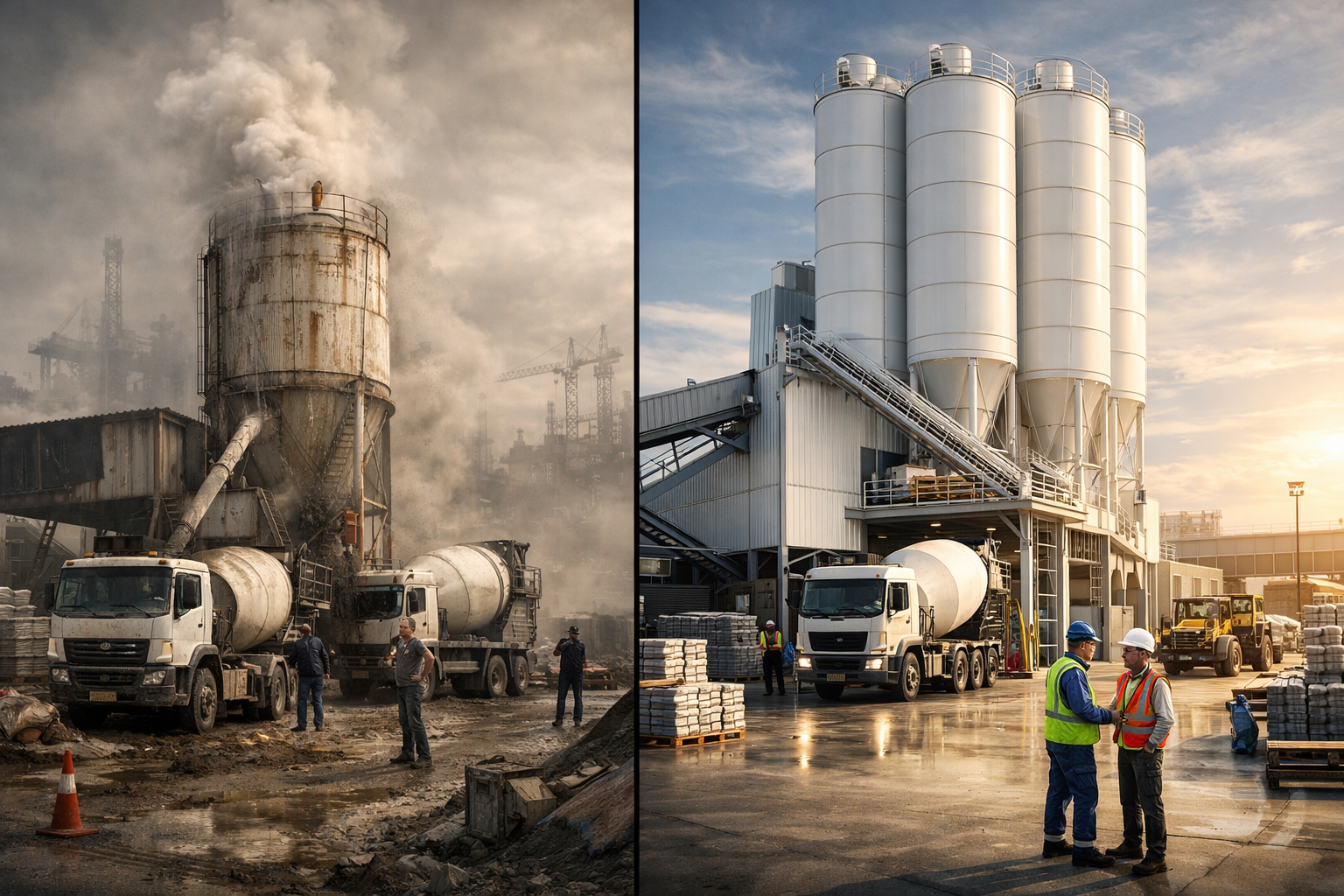
- Frequent refilling leads to project delays
- Excess storage increases initial investment cost
- Improper sizing affects material flow and batching accuracy
- Higher chances of cement spoilage due to long storage
The goal is simple:
Optimize storage based on your consumption rate and supply cycle.
Step 1: Understand Your Cement Consumption Rate
Start with your daily cement usage.
Formula:
Daily Cement Requirement (tons) = Concrete Production (m³/day) × Cement Content (kg/m³) ÷ 1000
Example:
- Production: 120 m³/day
- Cement content: 320 kg/m³
Daily Requirement = 120 × 320 ÷ 1000 = 38.4 tons/day
👉 This is your baseline for silo sizing.

Step 2: Define Storage Duration (Buffer Days)
You should always plan for buffer storage to avoid supply disruptions.
Typical buffer:
- Small projects: 2–3 days
- Medium RMC plants: 3–5 days
- Large infrastructure projects: 5–7 days
Formula:
Required Capacity (tons) = Daily Consumption × Number of Storage Days
Example:
38.4 tons/day × 4 days = 153.6 tons
Step 3: Consider Bulk Density of Cement
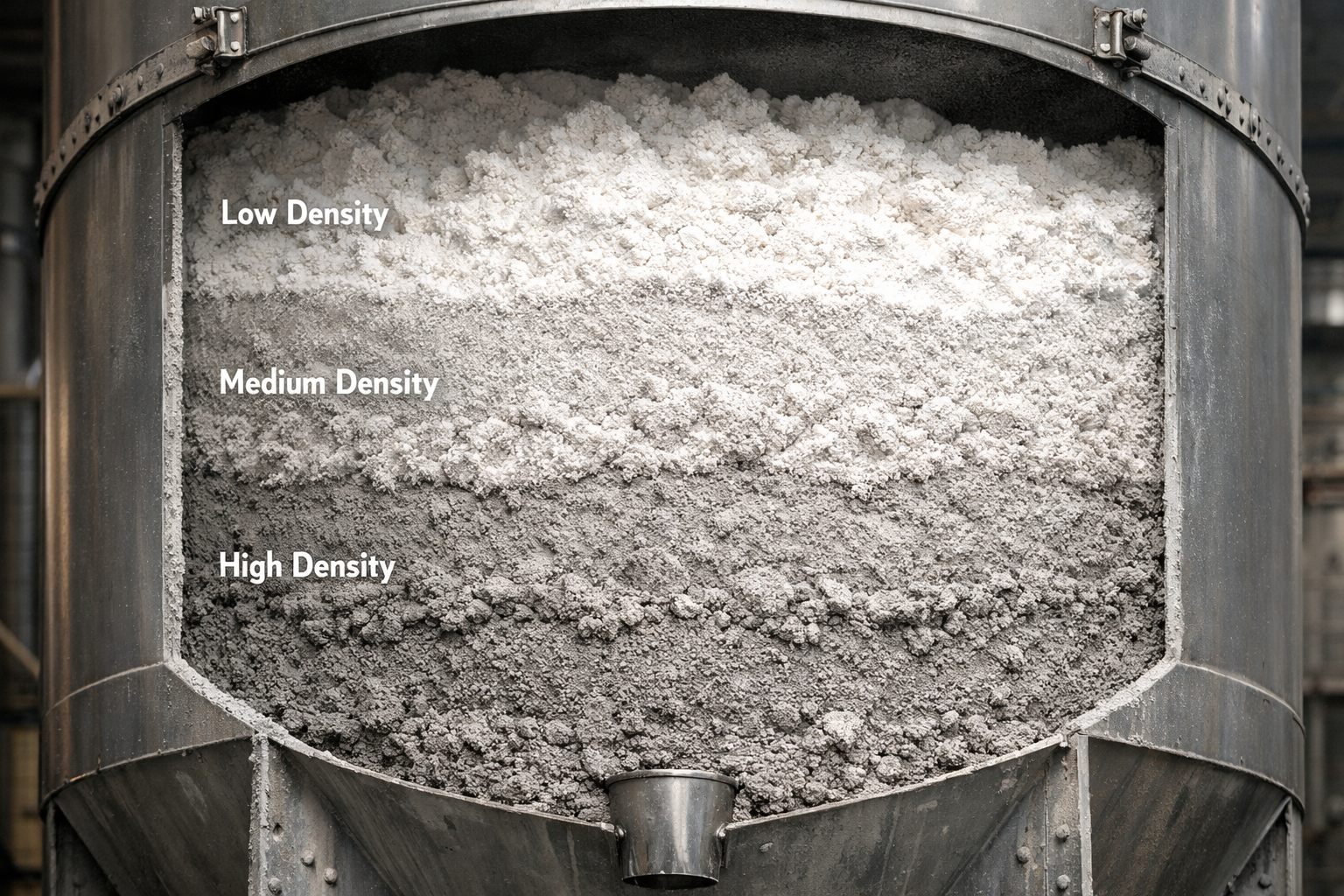
Cement is stored in volume (m³) but consumed in weight (tons).
- Standard bulk density of cement: ~1.44 tons/m³
Conversion Formula:
Silo Volume (m³) = Capacity (tons) ÷ Bulk Density
Example:
153.6 ÷ 1.44 = 106.6 m³
👉 So you need approximately a 100–120 m³ cement silo
Step 4: Factor in Operational Efficiency
Real-world conditions are never perfect. Always add:
- 10–15% extra capacity for safety
- Space for air pressure fluctuations
- Avoid full-load stress on silo structure
Final Recommended Capacity:
106.6 m³ + 15% ≈ 122 m³
👉 Ideal choice: 120-ton or 150-ton silo
Step 5: Choose the Right Silo Type
Capacity alone is not enough – configuration matters.
Based on Usage:
- Stationary Silos → Long-term projects, RMC plants
- Mobile Silos → Short-term or shifting sites
- Horizontal Silos → Space constraints, quick installation
Common Mistakes to Avoid
- Ignoring supply frequency
- If deliveries are delayed, small silos fail
- Overestimating production capacity
- Leads to unnecessary capital investment
- No future scalability planning
- Expansion becomes difficult later
- Wrong density assumptions
- Causes inaccurate sizing
Pro Tip: Match Silo Size with Logistics
Your silo capacity should align with:
- Cement truck capacity (typically 20–30 tons)
- Delivery frequency
- Site accessibility
👉 Example:
If your site receives one truck every 2 days, your silo must hold at least 2× truck load + buffer
Ideal Cement Silo Sizes (Industry Reference)
| Silo Capacity | Ideal Use Case |
| 50 Ton | Small construction sites |
| 100 Ton | Medium projects |
| 150–200 Ton | RMC plants |
| 300+ Ton | Large infrastructure projects |
How to Choose the Right Cement Silo – Quick Checklist
✔ What is your daily cement consumption?
✔ How many buffer days do you need?
✔ What is your delivery frequency?
✔ Do you plan to scale production?
✔ Is your site fixed or mobile?
Why Choose the Right Manufacturer Matters
Even with perfect calculations, poor silo design can fail your operations.
Look for:
- High-quality steel structure
- Efficient aeration system
- Reliable dust collectors
- Easy maintenance access
Conclusion
Choosing the right cement silo capacity is a strategic decision, not just a purchase.
By calculating:
- Daily consumption
- Buffer storage
- Volume conversion
- Operational safety
You can ensure:
✔ Smooth project execution
✔ Reduced operational cost
✔ No material shortage delays
Looking for the Right Cement Silo Solution?
At Shrinathji Infracon, we design and deliver high-performance cement silos tailored to your project requirements.
From capacity planning to installation, our team ensures you get the most efficient and cost-effective solution.
👉 Get in touch today to find the perfect silo for your project.
 English
 Hindi
Hindi Arabic
 Chinese (Simplified)
 Dutch
Dutch French
 German
 Italian
 Portuguese
 Russian
 Spanish